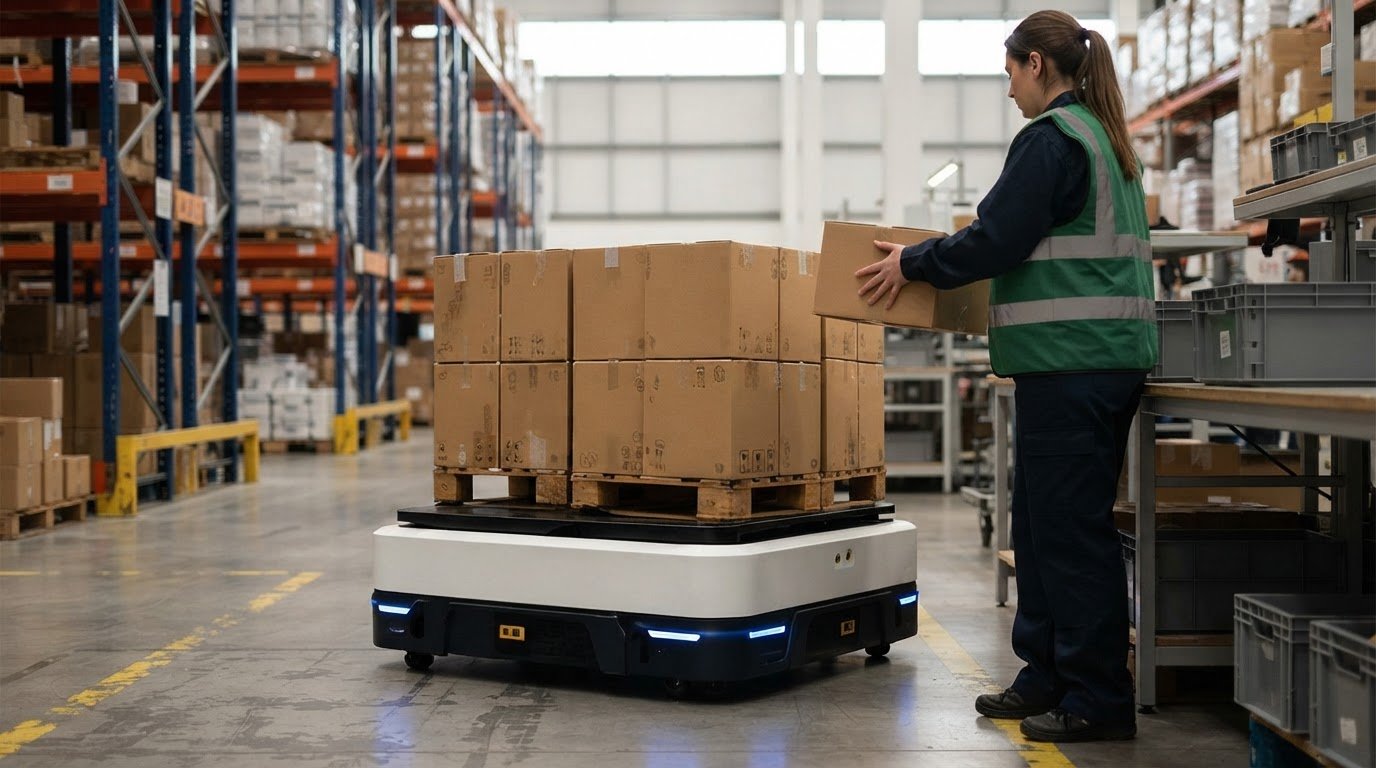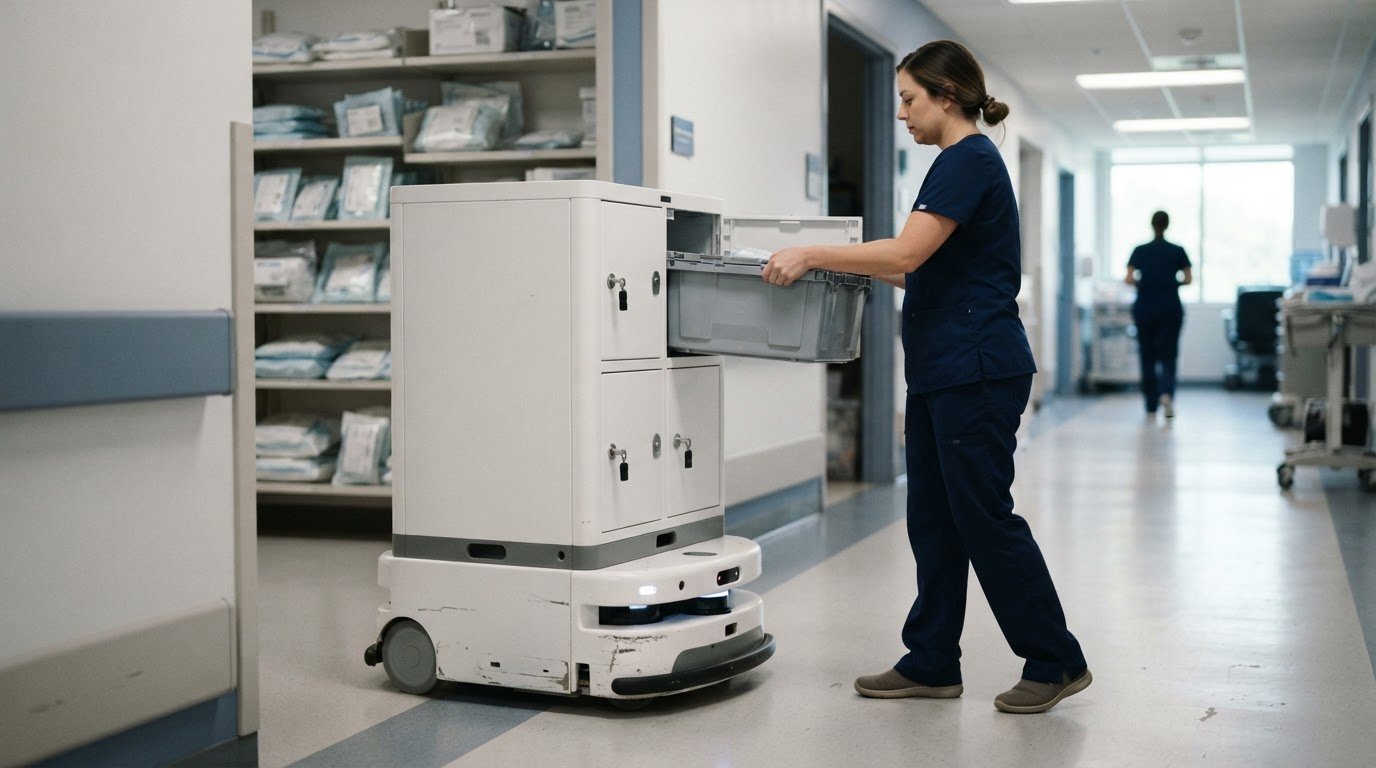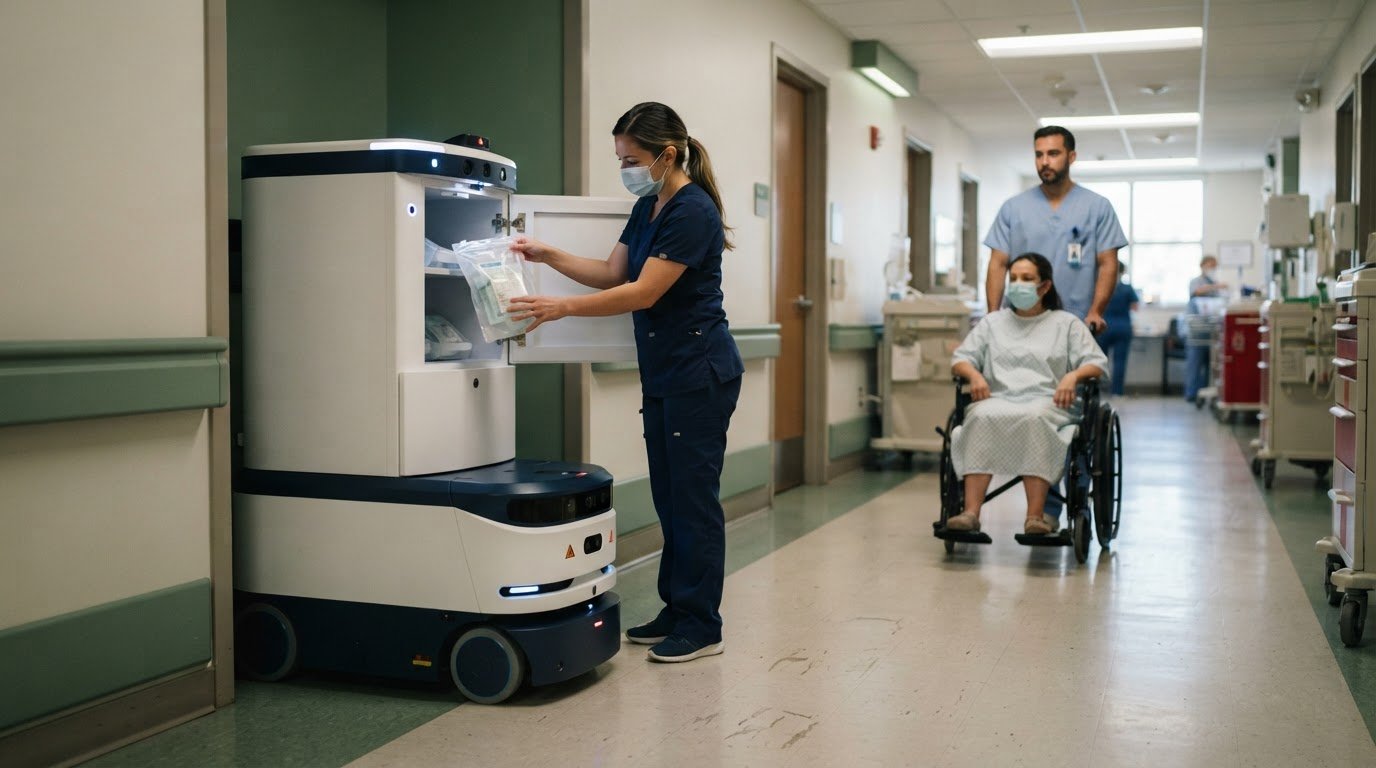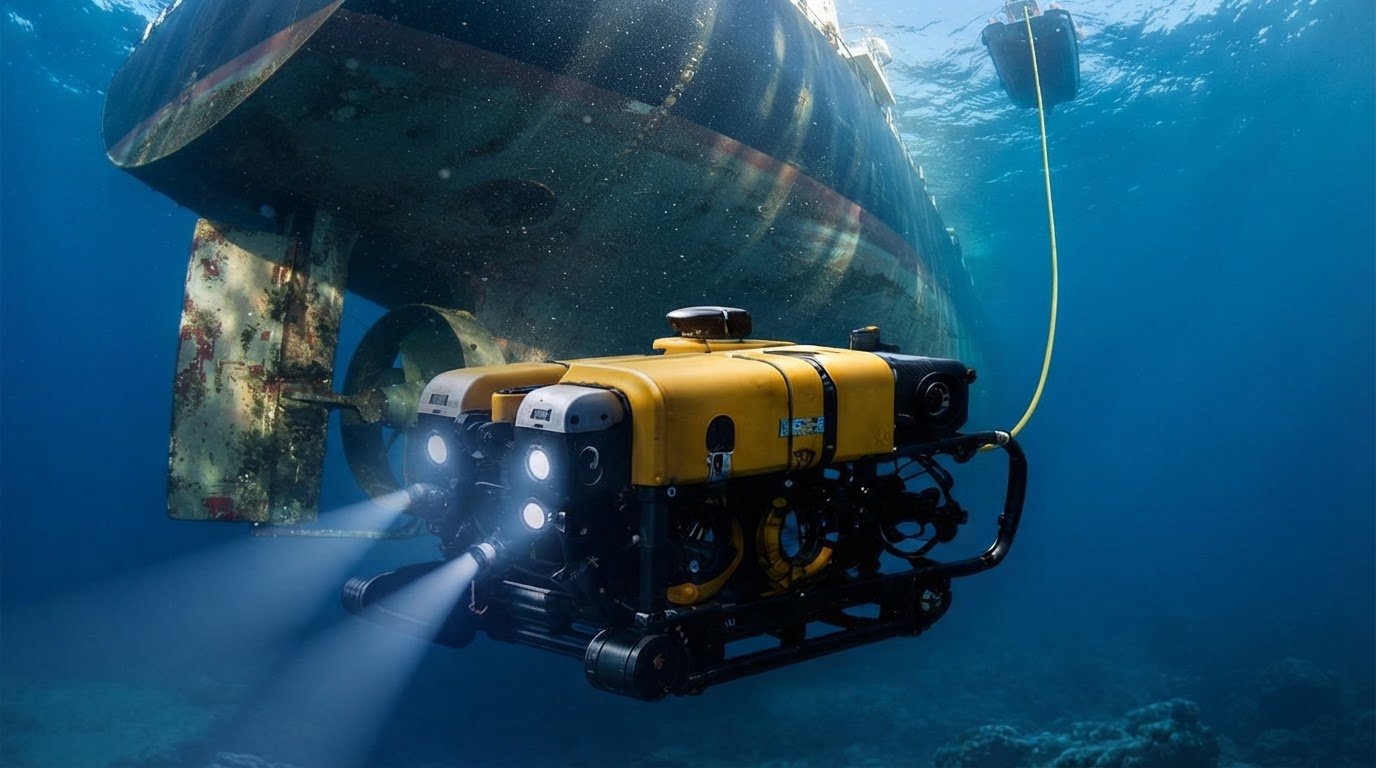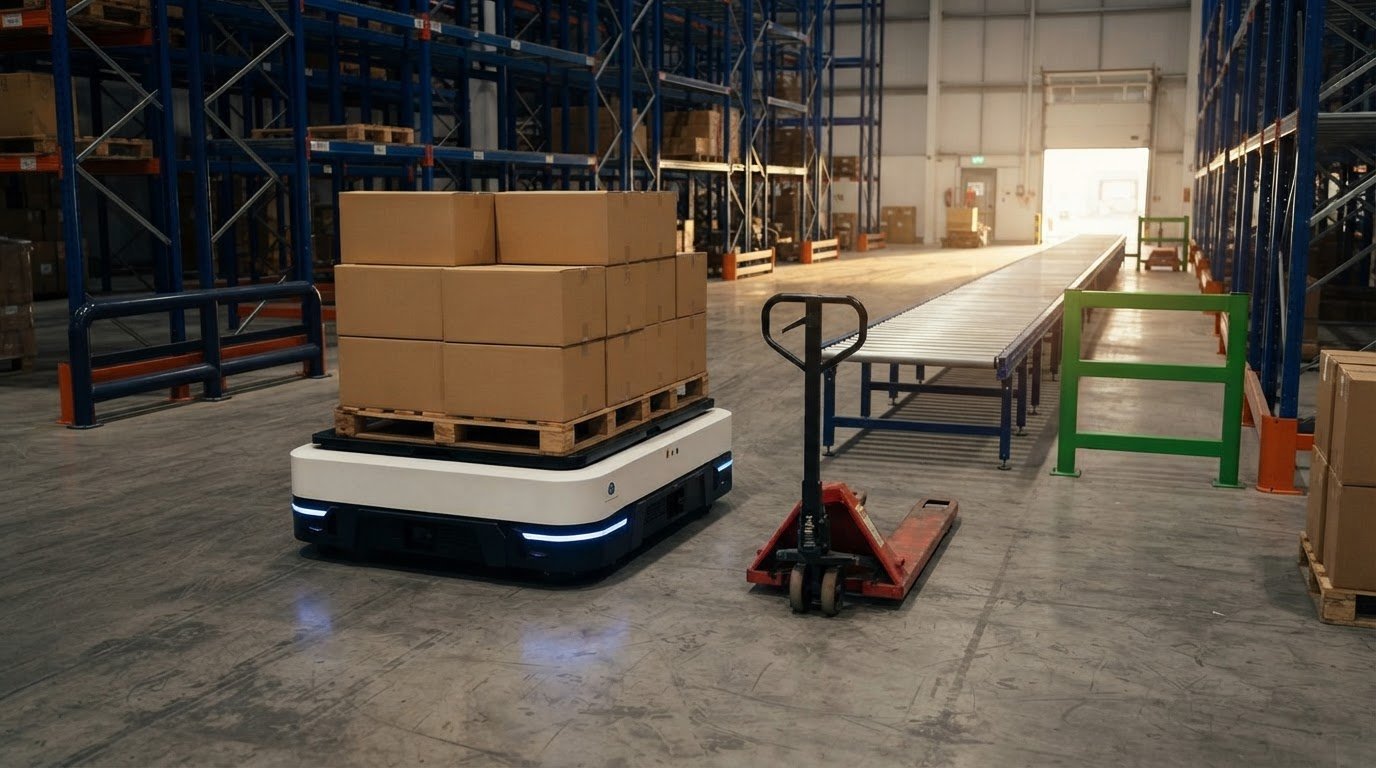
The key difference in AMR vs AGV is how each vehicle navigates. AGVs follow predetermined routes, while AMRs use sensors to interpret their surroundings and choose routes without relying on a fixed path. If an obstacle blocks the way, an AGV may stop and wait; an AMR can often adjust its route in real time.
Both technologies automate material movement, but they suit different operating conditions. Predictable workflows may favor guided routes, while changing layouts or frequent obstructions can make autonomous navigation more useful. The right choice depends on how your facility moves loads, manages traffic, and expects workflows to change.
This comparison covers differences in navigation, obstacle handling, payload capacity, implementation costs, and return on investment. It also explains what autonomy means in practice, helping you match the technology to your operating environment and make an informed decision.
Key Takeaways
- Match navigation to the workflow: fixed routes suit consistent movements, while adaptive navigation supports changing layouts and traffic.
- Compare how each system responds to blocked routes, not just how it travels when aisles are clear.
- Assess total implementation and operating demands, including route infrastructure, deployment effort and the value of future flexibility.
- Choose a vehicle by payload and load-handling requirements; capacity alone doesn’t determine whether it fits the task.
- Separate automation from autonomy to identify how much route adjustment and decision-making the operation requires.
AGV and AMR navigation methods
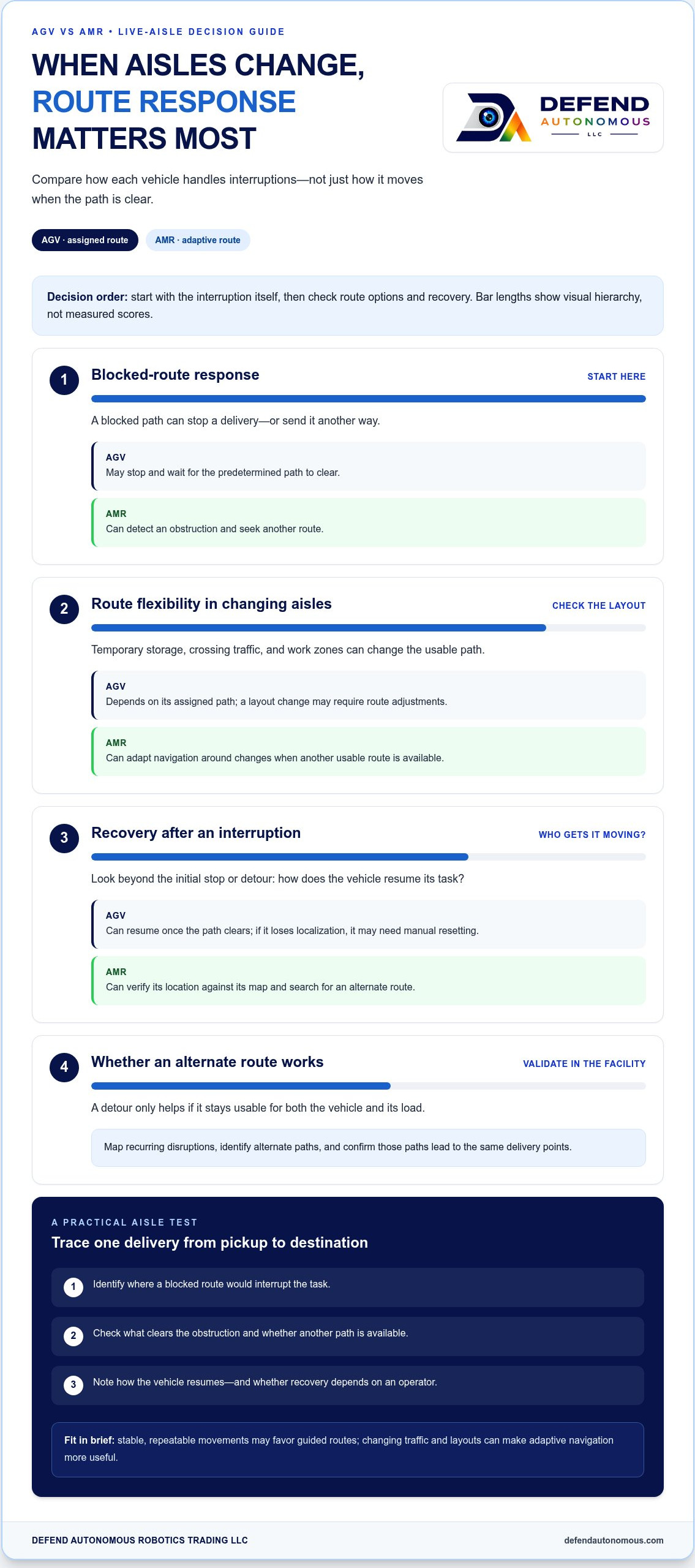
AGVs navigate along predetermined routes, while AMRs use sensors to interpret their surroundings and select a path. When an obstacle blocks the way, an AGV may stop; an AMR can detect it and seek another route.
AGVs follow routes designed around a facility’s material flow. Magnetic strips, floor wires, and visual markers can guide them from a pickup point to a delivery station. Some AGVs use infrastructure-free sensing, but their operating logic still follows a planned route. A layout change may require route adjustments before the vehicle can use a new path.
AMRs use combinations of lidar, cameras, and other sensors to detect people, equipment, and changing aisle conditions. Sensor fusion can combine lidar, time-of-flight technology, 3D cameras, and ultrasonic sensors. This data supports real-time perception, so an AMR can navigate a crowded aisle or approach a workstation while accounting for obstacles in its path.
Mapping adds another layer of autonomy. Some AMRs use simultaneous localization and mapping, or SLAM, to build a map while locating themselves within it. They can update internal maps as obstacles or facility conditions change. A typical setup maps the facility with a robot, then configures zones and points of interest in the fleet manager. The map helps coordinate routes across the operating area.
Localization affects what happens when a vehicle loses track of its position. An AGV may need manual resetting before it resumes its assigned route. An AMR can verify its location against its map and search for an alternate route. Neither approach removes the need for an installation-specific safety assessment: according to the International Organization for Standardization (ISO), ISO 13849-1 is cited for rating the safety functions of AGV and AMR installations to a performance level.
| Navigation criterion | AGV | AMR |
|---|---|---|
| Route planning | Predetermined path | Route selected using surroundings |
| Guidance | Markers, wires, or sensing | Sensor data and mapped space |
| Obstacle response | May stop and wait | Can detect and reroute |
| Layout changes | May require route changes | Can revise navigation around changes |
| Localization recovery | May need manual resetting | Can verify position and seek a route |
Choose an AGV for repeatable movements on stable routes. Choose an AMR when changing traffic and layouts make route flexibility a priority.
Obstacle avoidance and route flexibility
Obstacle response determines whether a mobile robot waits, detours, or needs manual intervention. Compare vehicle behavior in real aisle conditions, not only on a planned route.
Obstacle Detection and Avoidance
Detection comes first: sensors identify an obstruction in the vehicle’s path. An AMR can use that information to adjust its route, while an AGV may stop and wait for the path to clear. This difference matters in a shared aisle, where a parked pallet or crossing worker can interrupt planned movement.
Compare responses using real operating examples. A temporary obstruction may allow an AMR to pass via another available route. If the obstruction blocks an AGV’s predetermined path, movement may pause until it is removed. This distinction helps teams assess how each system fits their traffic patterns.
Obstacle Avoidance and Recovery
Recovery describes what happens after an initial stop or detour. An AGV can resume its assigned movement once the path clears; if it cannot maintain localization, it may need manual resetting. An AMR can verify its location and search for another route, helping it continue around a temporary blockage.
For a practical comparison, trace one delivery from pickup to destination. Note where a blocked route would interrupt the task, what clears it, and how the vehicle resumes. This shows whether recovery depends on an operator or the robot’s route-planning capability.
Route Changes in Live Operations
Route flexibility is more valuable when aisle conditions shift during a work period. For example, a staging area may temporarily narrow a passage used to move materials. An AMR can detect the change and adapt its route; a hard-guided AGV remains dependent on its assigned path and may wait for the obstruction to clear.
Map recurring disruptions in the facility before selecting a system. Include temporary storage, crossing traffic, and work zones. Then identify whether alternate routes exist and lead to the same delivery points. An alternate path helps only if it remains usable for both the vehicle and its load.
Rerouting and Operational Continuity
Rerouting is more than a navigation feature; it changes how teams manage interruptions. An AMR can choose another route when its sensors identify a blockage. Frequent layout changes are therefore an important selection factor.
Separate temporary obstacles from permanent layout changes. For a temporary blockage, consider how quickly the path clears and whether another route is practical. For a lasting change, assess the work required to revise guidance and restore normal flow. This comparison shows whether the operation needs adaptive navigation or benefits from consistent, fixed routes.
How do AMRs contribute to cost reduction and a faster return on investment (ROI)?
AMR economics depend on more than vehicle cost. Compare infrastructure, deployment, labor, and workflow flexibility over the full operating period.
Initial Costs and Return on Investment
ROI compares the value created by automated transport with the total investment and operating expense. AMRs can offer greater flexibility in complex warehouse environments because they can adapt their routes without fixed-path modifications. Before choosing a system, assess the expected effects on labor, transport capacity, production flow, and interruptions.
Build the comparison around a specific movement, such as replenishing a manufacturing line. Record the labor and time it currently requires, then estimate how automation would change the task. Include vehicle utilization, charging, maintenance, and workflow changes. A simple, repeatable route may favor an AGV; varied destinations can increase the value of AMR flexibility.
Implementation and Operating Costs
AGVs typically cost less to implement, but physical guidance infrastructure can add installation work and limit later changes. AMRs avoid under-floor wiring and magnetic tape, reducing facility modifications. Their initial setup still involves mapping, configuration, software integration, and testing routes in real operating conditions.
Separate one-time deployment work from recurring operating costs. For an AGV, account for guidance infrastructure and the labor required to maintain assigned routes. For an AMR, consider fleet software, charging, maintenance, and the time needed to configure new zones. Additional AMRs can be operational in less than one day when they share a centrally controlled fleet map.
In the United States, the cited technical references include ISO 12100 for site-specific risk assessment and ISO 13849-1 for rating safety functions to a performance level, according to the International Organization for Standardization (ISO). These references inform installation safety planning; assess the facility’s hazards and vehicle tasks as part of deployment.
Integration links vehicle movements with warehouse management systems and other equipment. AMRs can integrate with existing surroundings and software, while a fleet manager can coordinate maps, zones, and points of interest. VDA 5050 version 3.0, released in March 2026, enables a fleet manager to orchestrate mixed-brand AGV and AMR fleets. For a broader view of how connected systems support autonomous material handling and coordinated warehouse flow, consider how vehicles, warehouse software, and storage equipment exchange information.
For warehouse system integration, define how a transport request starts, which equipment receives it, and how completion is reported. Then test a representative route from storage to a production handoff. This can reveal workflow gaps before the system handles routine traffic.
Can AMRs Handle Heavy Loads?
Yes. Payload capacity, travel speed, and safety depend on the selected vehicle and its task. Compare rated performance under the load and conditions your facility requires.
For pallet transport, start with the heaviest intended load, then consider its dimensions and position on the vehicle. A staged pallet may be misaligned, and AMRs can adapt to that positioning. Confirm the load is within the vehicle’s payload rating and can be picked up and delivered at the intended handoff points.
Docking precision matters as much as rated capacity. AMRs can perform precision docking maneuvers as effectively as AGVs. Assess whether the vehicle can approach the pallet or station, align its load interface, and complete the transfer in the available space. A pallet that overhangs its platform or blocks sensors changes the task, even if its weight is within the rating.
Choose payload options for the application, not a general label such as “heavy duty.” Define whether the robot carries a pallet, pulls a load, or moves material on a custom fixture. Then document the load’s weight, dimensions, stability, and pickup method. These details determine which vehicle configuration can perform the movement safely and consistently.
Compare speed with the same care. Usable transport speed depends on the vehicle model, load, route conditions, and operating requirements. Compare loaded performance over the actual distance, including turns, docking, and stops. A fast empty run through an open aisle doesn’t show how quickly a loaded vehicle can replenish production.
AGVs and AMRs are designed with safety features such as emergency stop buttons and bumpers. Assess these alongside the load and route: a bulky pallet may affect visibility, while a narrow aisle can limit maneuvering space. Map people, equipment, and delivery points to understand conditions around each movement.
Use a practical selection sequence: define the heaviest load, verify its dimensions and stability, and identify pickup and delivery interfaces. Next, assess the loaded route, including turns and docking. Finally, compare each candidate vehicle’s rated payload, speed for that task, and safety features. A magnetic guide path or other infrastructure may suit a fixed transport loop, while changing material flows can favor greater route flexibility. Select against the complete application, not payload alone.
Automated versus autonomous machines
Automation executes assigned work; autonomy adds the ability to interpret conditions and adapt behavior. This distinction matters when choosing between a fixed transport process and mobile robots expected to respond to changing demands.
An automated guided vehicle follows instructions through a defined operating process. For example, it can move a load between the same production points along an assigned route. Automation handles the movement, but a blocked route can require a pause or human intervention. This approach can suit stable workflows where consistency matters more than route flexibility.
An autonomous mobile robot uses sensors, maps, and navigation software to interpret its surroundings. It can select or revise a route as conditions change, such as when equipment temporarily blocks an aisle. This added autonomy supports more variable work, but makes system configuration and fleet coordination important parts of the operation.
Autonomy doesn’t mean a robot operates without rules or supervision. Teams define destinations, traffic zones, task priorities, and handoff points through the operating system. The robot then makes navigation decisions within those boundaries. For example, a fleet manager can assign a delivery while the AMR chooses a usable path to its destination.
Industrial terminology also groups different vehicle types under driverless industrial trucks. According to the International Organization for Standardization (ISO), examples defined in ISO 5053-1:2020 include “automated guided vehicle,” “autonomous mobile robot,” “automated guided cart,” and “tunnel tugger.” These labels describe categories, while actual capability depends on the vehicle’s navigation and control system.
Use these questions to identify the level of autonomy your workflow needs:
- How stable is the task? Repeated movement between fixed stations can suit guided automation.
- How often do conditions change? Dynamic aisles and variable destinations increase the value of autonomous navigation.
- Where should decisions sit? Define which actions the vehicle can take and which require operator direction.
Then assess the software alongside the vehicle. A robot may navigate independently, but task release, destination selection, and coordination with other equipment still rely on clear operating rules. For a mixed workflow, document each movement from request through delivery, then identify where fixed guidance is sufficient and where adaptive decisions add value.
To map those requirements into an automation plan, outline your mobile-robot workflows and the decisions each task demands.
Defend Autonomous Robotics Trading: AMR & AGV Automation Solutions
Defend Autonomous Robotics Trading offers AMR & AGV Automation Solutions for organizations assessing automated material movement. Consider this offering when comparing fixed-route transport with autonomous navigation or deciding which approach fits your facility’s workflows.
Prepare a clear operating brief before discussing next steps: describe the tasks, payloads, routes, obstacles, and systems involved. These requirements keep the decision focused on operational needs rather than vehicle labels. A stable transport loop and a dynamic warehouse may call for different navigation approaches, while load handling and equipment integration shape the deployment plan.
If you’re planning an automation project, contact Defend Autonomous Robotics Trading to discuss AMR and AGV solutions.
Turn Your Automation Decision Into an Operating Plan
Make the next step an operating plan, not just a vehicle selection. Define the material flows the system must support, the handoffs it must complete, and the changes your facility may need to accommodate. Then align operations, engineering, and safety stakeholders around the same requirements. A shared brief turns the AMR vs AGV comparison into a practical design decision grounded in the work your site needs to perform.
Before deployment, document the workflows that matter most and decide how success will be assessed. Consider how the selected approach fits existing equipment, facility routines, and future automation priorities. A clear plan gives your team a stronger basis for sequencing decisions and coordinating implementation.
Defend Autonomous Robotics Trading LLC offers automation solutions for organizations evaluating industrial quadruped robot applications. Contact Defend Autonomous Robotics Trading LLC to discuss your operational requirements and next steps. Build a focused plan, align your teams, and move forward with confidence.
Frequently Asked Questions
From automated to autonomous: What’s the difference?
Automation carries out programmed tasks; autonomy lets a machine interpret conditions and select actions within defined operating limits. The AMR vs AGV distinction reflects how much a system can adjust its route or behavior without a new operator instruction. For example, an automated vehicle can repeat a scheduled delivery, while an autonomous robot can assess a changing aisle before proceeding. Both remain governed by task instructions and facility rules.
What are the main advantages of using AMRs over AGVs?
AMRs offer more flexibility when routes, destinations, or traffic conditions change. This can help a warehouse manage shifting priorities, such as sending replenishment to different work areas as demand changes. Autonomous navigation can also reduce reliance on fixed-route infrastructure. The benefit is strongest when workflows vary; for consistent, repeatable movements, an AGV’s guided approach may fit better.
Are AGVs Being Phased Out?
No. AGVs remain practical for stable processes where vehicles repeatedly move between defined points. A facility with an established guided route may continue using it for predictable deliveries, even as it introduces AMRs for other tasks. The decision is about operational fit, not replacing every guided vehicle. Teams can assess each movement separately and retain automation that meets the workflow’s needs.
Are there any hidden costs associated with using AMRs?
Potential costs beyond the vehicle include fleet software, system integration, mapping, operator training, charging arrangements, maintenance, and workflow adjustments. Assess the full operating process: identify who configures tasks, how the robot communicates with facility systems, and what changes are needed at pickup and delivery points. This makes cost planning more complete without treating the vehicle purchase as the entire investment.
Can AMRs be easily scaled up to meet evolving warehouse demands?
AMR fleets can scale by adding vehicles and assigning them to more tasks, provided fleet coordination and workflows support expansion. Before growing a fleet, identify the movements with the greatest demand and ensure pickup points, delivery areas, and traffic rules are clearly defined. This helps prevent additional robots from converging on the same bottleneck instead of increasing useful transport capacity.
Can AMRs operate efficiently in narrow or crowded spaces?
Yes, AMRs can navigate narrow aisles and crowded areas using sensors and obstacle avoidance. Performance depends on the space available for the robot, its load, and maneuvering room at turns or handoff points. Assess a representative route with typical traffic, temporary obstructions, and the full load configuration. This shows whether the robot can complete the movement without disrupting nearby work.
Do AGVs and AMRs Need to Integrate With Other Factory Systems?
Integration matters when vehicle tasks depend on information from warehouse or production systems. For example, a system can issue a transport request when a workstation needs material, then record when delivery is complete. Define how tasks are released, destinations identified, and handoffs acknowledged. Clear interfaces help coordinate robot movements with factory equipment and operational workflows.
What is the difference between an AMR and an AGV?
An AGV typically follows a predetermined route, while an AMR uses onboard sensing and navigation to choose or adjust its path. In an AMR vs AGV comparison, assess how each vehicle responds to a blocked route or changed destination instead of relying on labels alone. Compare navigation behavior, route-change processes, and operator requirements with the specific task each vehicle will perform.