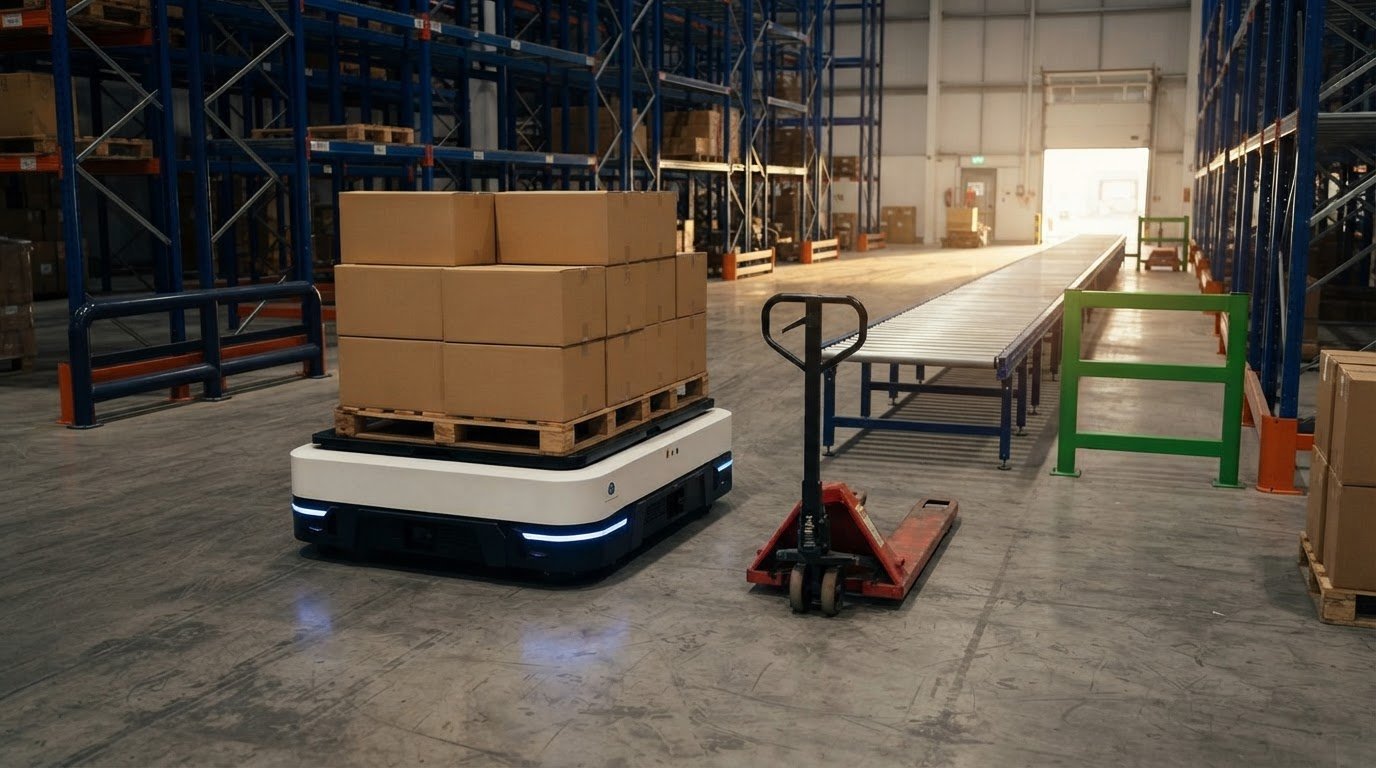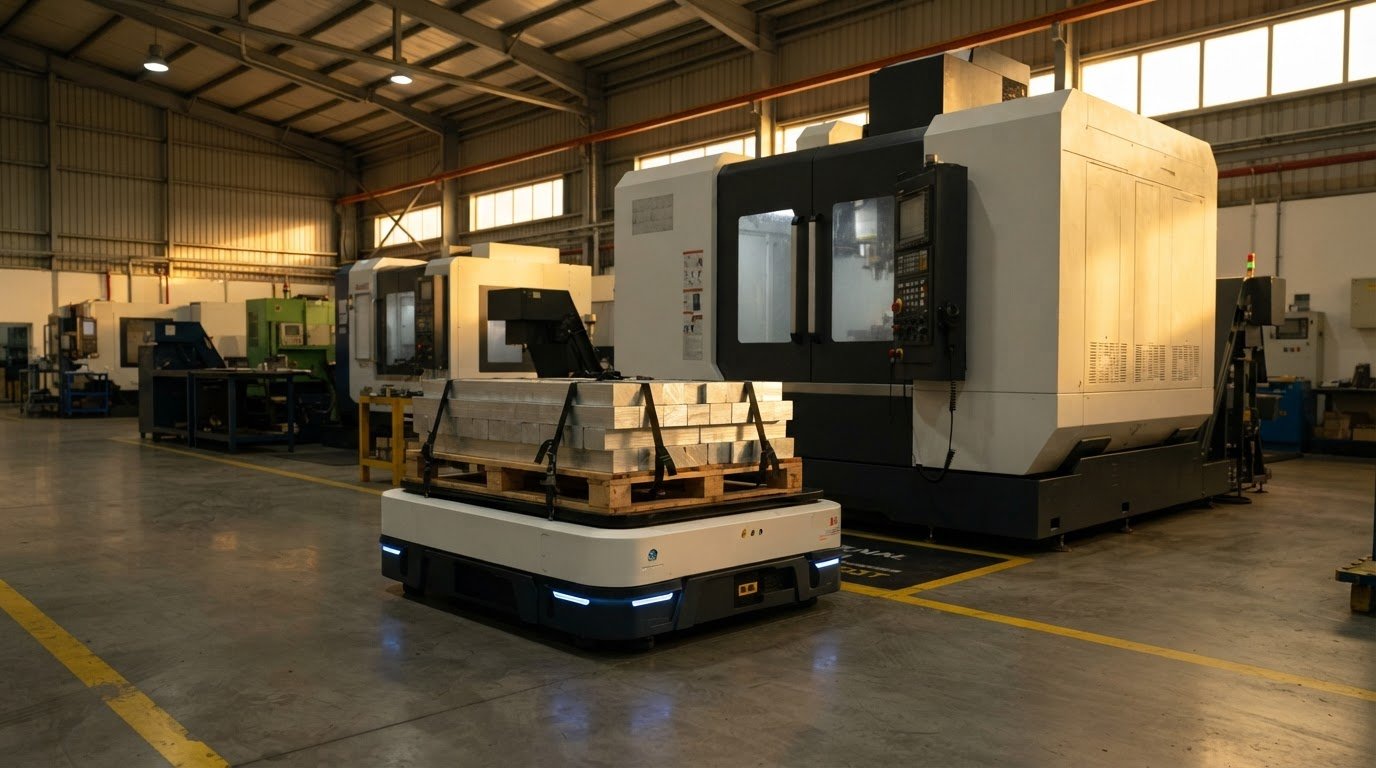
Warehouse robots do more than move orders: they connect fulfillment tasks into a coordinated flow. Warehouse autonomous robotics combines autonomous mobile robots (AMRs) and automated guided vehicles (AGVs) with warehouse workflows to move inventory, deliver goods to picking stations, and transport orders between process points.
That coordination matters because fulfillment depends on more than speed. Inventory must reach the right pick point, work must be sequenced, and goods must keep moving as demand shifts. Autonomous systems support this flow by handling repetitive transport and sharing task and status information with warehouse teams.
This article explains what warehouse robotics includes, how AMRs support goods-to-person picking and internal transport, and how automation can address labor pressure while keeping people central to the operation. It also covers the practical factors that shape deployment, including workflow fit, facility layout, system integration, and workforce readiness. Together, these considerations show where robotics can strengthen fulfillment and where human coordination remains essential.
Key Takeaways
- See how mobile robots move inventory and orders through picking and transport workflows.
- Understand how automation can support fulfillment when labor capacity is under pressure.
- Learn why warehouse management system integration helps coordinate tasks and inventory updates.
- Compare the roles of mobile robots, guided vehicles, and other warehouse automation systems.
Autonomous mobile robots for picking and transport
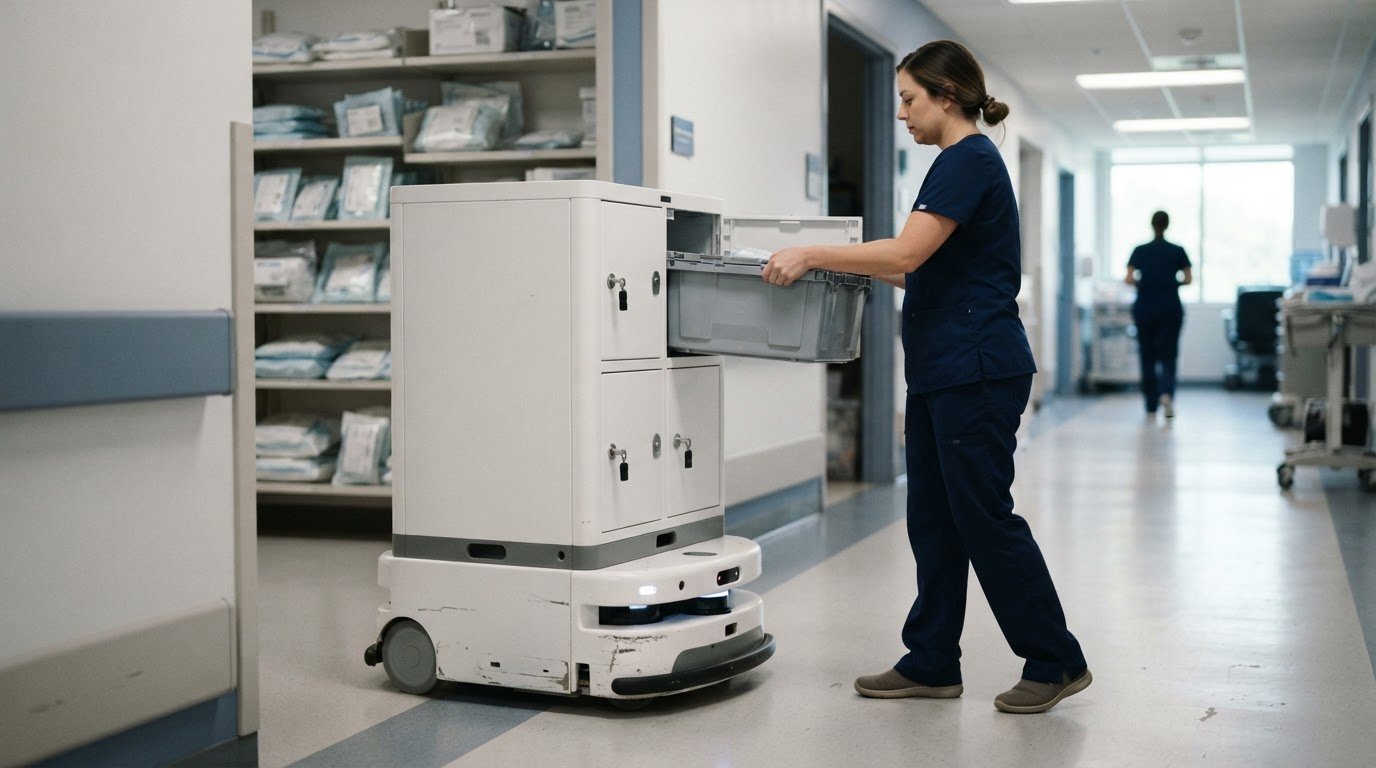
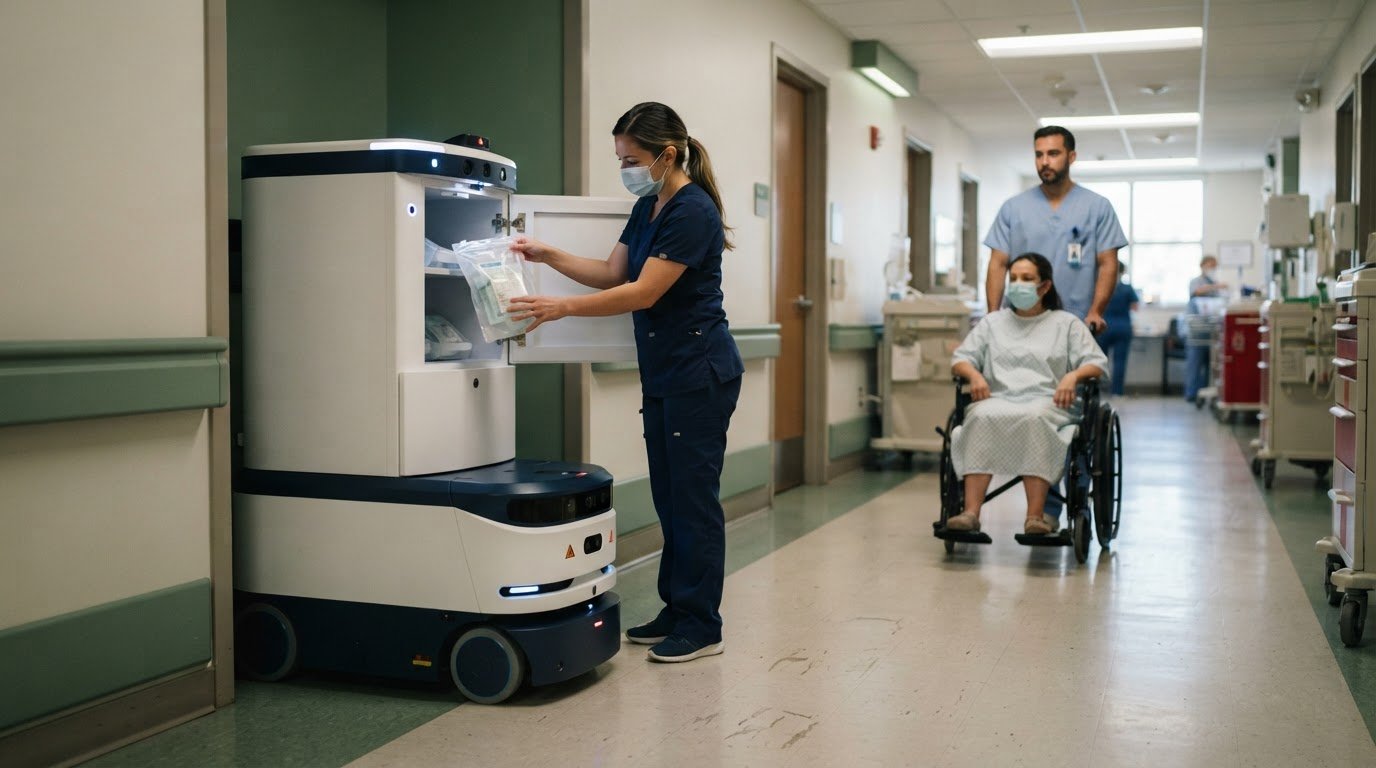
Autonomous mobile robots (AMRs) move inventory between storage, picking, packing, and dispatch areas. Their mobile design can support warehouse automation without requiring every route to follow a fixed conveyor line.
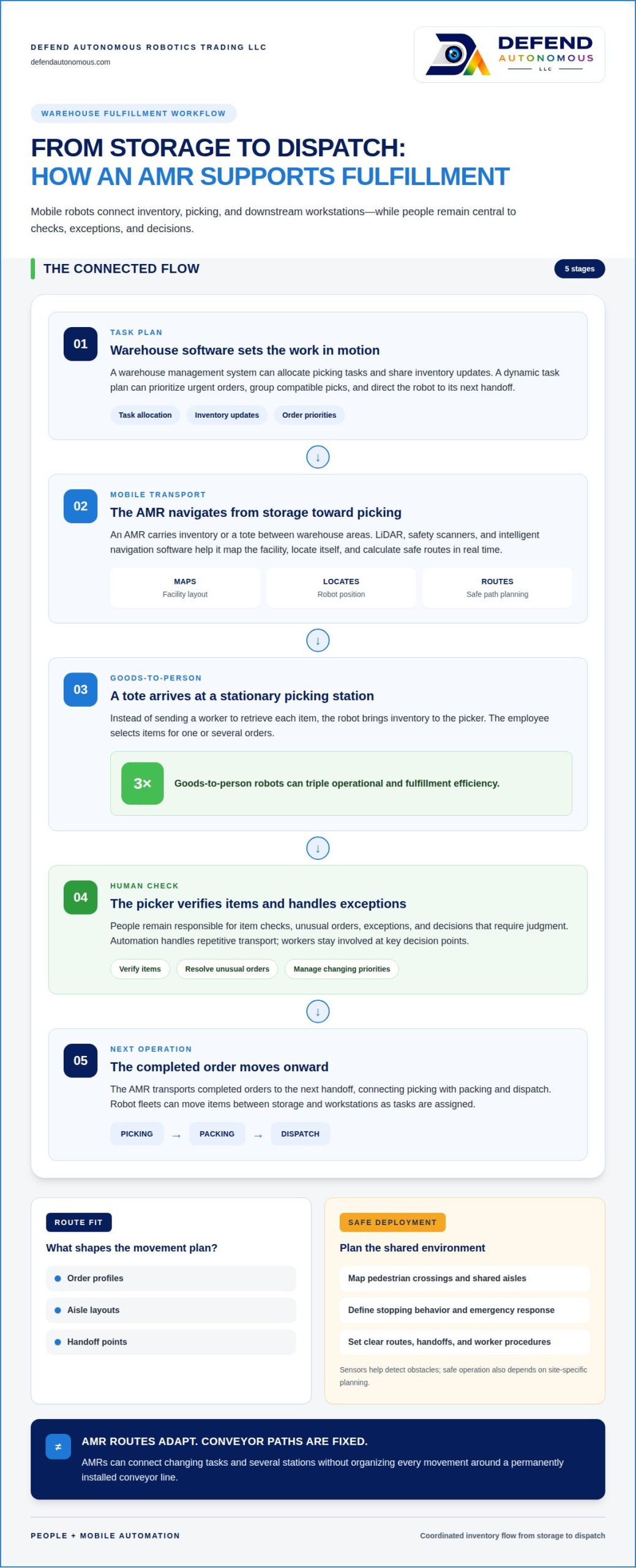
In a picking workflow, an AMR can carry totes to a workstation and transport completed orders to the next operation. LiDAR, safety scanners, and intelligent navigation software help AMRs map facilities, locate themselves, and calculate safe routes in real time. Order profiles, aisle layouts, and handoff points determine how these movements fit into warehouse operations.
Robots Compared With Conveyors and Human Labor
AMRs transport goods along routes that can adapt to changing tasks, unlike conveyors installed along fixed paths. This distinction matters when a warehouse needs to connect several picking or packing stations without organizing every movement around a permanent line.
People remain responsible for exceptions, decisions, and physical tasks that require judgment. For example, an AMR can bring a tote to a picker, who verifies the item and resolves an unusual order. Effective workflows assign repetitive transport to automation while keeping people involved at key decision points.
Safety Standards and Regulations
Safety standards and regulations govern how AMRs operate around people and equipment in US warehouses. Applicable requirements depend on the robot, its tasks, and the facility’s conditions, so deployment planning needs to reflect the actual operating environment.
Before robots enter active workflows, map pedestrian crossings, shared aisles, stopping behavior, and emergency response procedures. Sensors help an AMR detect obstacles, but safe operation also depends on clear routes, defined handoffs, and procedures workers understand. A site-specific assessment helps coordinate robot movement with people and other equipment.
Robot Purchase and Lease Costs
Buying or leasing an autonomous robot involves a project-specific cost shaped by robot capacity, navigation, fleet size, and software integration. These factors matter because a compact unit serving a short route has different requirements from a system moving heavier loads across multiple warehouse zones.
The cost depends on the case and is set after a quote request, with payload, operating needs, integration, and support scope shaping the estimate. A purchase or lease assessment should also account for how the robot fits existing processes and whether the fleet can scale with future demand. Those details connect the commercial model to the work the system must perform.
E-commerce fulfillment and labor shortages
E-commerce operations must handle changing order volumes while maintaining accurate picking and dispatch. Goods-to-person workflows and mobile robots can support fulfillment when staffing capacity is constrained.
Goods-to-Person Order Fulfillment
Goods-to-person fulfillment brings inventory to a stationary picker instead of sending workers to retrieve items from shelves. This changes how labor and travel are distributed across warehouse operations. For example, a robot can deliver a tote to a picking station, where an employee selects items for several orders. Goods-to-person robots can triple operational and fulfillment efficiency, making this approach relevant where travel time limits throughput.
Picking and Order Fulfillment
Picking means identifying and collecting ordered items before packing and dispatch. Warehouse management systems can allocate tasks and share inventory updates, while robot fleets transport items between storage and workstations. A dynamic task plan can prioritize urgent orders, group compatible picks, and direct mobile robots to the next handoff. This coordination helps teams manage order flow without making every picker responsible for movements across the facility.
Labor availability shapes fulfillment capacity. BLS JOLTS data showed persistently high monthly job openings across transportation, warehousing, and utilities from 2024 to 2026. Robots can perform repetitive tasks 24/7, supporting operations when staffing is constrained. Automated guided vehicles can cut labor costs by about 30%, while workers remain central to exceptions, item checks, and changing priorities.
During a demand surge, for example, warehouse management software can release picking tasks as orders arrive and coordinate robot transport to packing. How well the system responds depends on accurate inventory records, clear work zones, and reliable task handoffs. Automation works best when physical processes stay aligned with digital order data.
Explore warehouse automation planning as a way to connect fulfillment needs with autonomous system design.
What Is Warehouse Robotics?
Warehouse robotics brings together mobile machines, control software, and warehouse processes to move or handle inventory. Integration with a warehouse management system helps coordinate tasks and keep inventory records current.
Goods-to-Person and Shelf-to-Worker Systems
Goods-to-person systems bring stored items to stationary pickers, while shelf-to-worker systems move shelving or storage units toward a work area. Both reduce the need for employees to travel through distribution aisles for each item. For example, a system can deliver a tote to a picking station, where a worker selects products for several orders. This approach can help fulfillment operations organize repetitive retrieval work.
Robotic System Scalability
Scalability means extending a robotic system as order volumes, workflows, or facility needs change. A warehouse might begin with robots serving one process, then broaden task assignments or coverage as integration and operational needs evolve. Return on investment and payback depend on the project’s investment, throughput gains, labor allocation, and ongoing operating costs. Together, these factors shape how operational savings compare with deployment costs.
Autonomous Robot Implementation by Providers
Implementation means matching robots, software, and workflows to a warehouse’s operating requirements. A project begins by assessing order profiles, inventory turnover, peak-season demand, bottlenecks, and facility layout. The next steps are to plan how robots will connect with warehouse management software, receive tasks, and update inventory records. Testing representative processes, such as replenishment and order picking, can reveal handoff issues before wider deployment. Employee training supports daily operation and basic troubleshooting.
Risks and Limitations
Robotic systems rely on suitable layouts, reliable data, and coordinated handoffs, so a mismatch can disrupt fulfillment. Congested aisles, inaccurate inventory records, or unclear task priorities can interfere with robot assignments. Integration also requires the warehouse management system and automation software to exchange useful task and status information. Workers need training to operate the system and address basic issues. Robots perform defined tasks, while people remain essential for exceptions and changing priorities.
Warehouse robotics company types and capabilities
Warehouse robotics providers integrate systems for transport, sorting, storage, and retrieval. In the United States, system choices include autonomous mobile robots, automated guided vehicles, goods-to-person systems, and robotic sorters; the right configuration depends on inventory and logistics requirements, not a universal vendor ranking.
Warehouse Robot Types
Warehouse robot types range from mobile transport units to fixed equipment that handles or sorts products. Each capability supports a different step in material flow, so the task should guide the equipment choice.
AMRs move goods through changing routes, while automated guided vehicles can follow embedded markers or LiDAR navigation. Robotic sorters use computer vision and mechanized arms to identify and direct items. Collaborative robots can work alongside warehouse operators using sensors and safety features. A provider may combine these systems when one operation needs transport, item handling, and sortation.
Case Handling Across Sizes and Types
Case handling means moving and sorting packaged goods with different dimensions, weights, and packaging formats. Matching equipment to the case mix supports accurate handling and helps prevent bottlenecks between receiving, storage, and dispatch.
Stable cartons, for example, may suit a conveyor or robotic palletizing process, while mixed items may need vision-guided sorting. Case dimensions, package stability, and destination rules inform the equipment choice. Software can then coordinate routing with inventory records so each case reaches the correct destination.
Capabilities also differ in precision and retrieval method. A mobile robot transports a tote or pallet, while a robotic arm can pick and place individual products. A sorter directs items to assigned destinations, and warehouse software coordinates these movements with order and inventory data. Selecting a combination starts with the task, item presentation, and existing material flow.
System selection should align with the physical work, not just the equipment category. A distribution operation handling varied cartons may need flexible routing and item recognition, while a site moving consistent loads may prioritize repeatable transport. For an integrated solution, explore warehouse automation capabilities.
Defend Autonomous Robotics Trading
Defend Autonomous Robotics Trading LLC provides warehouse autonomous solutions and AMR & AGV automation for operations assessing robotic transport, picking, or material movement. Its solutions support warehouses seeking to align automation with fulfillment processes, facility layout, and inventory-handling requirements.
A practical discussion can focus on the tasks robots need to perform, how they fit existing workflows, and which system capabilities support the operation. This helps define an automation approach around the warehouse’s priorities. Defend Autonomous Robotics Trading LLC also provides CNC and advanced manufacturing solutions, AI Coffee & Beverage Robots, and EV charging and sustainable energy solutions.
Contact Defend Autonomous Robotics Trading LLC to discuss your warehouse automation needs.
Set the Next Phase of Fulfillment in Motion
Start by defining what the operation needs to handle: changing order profiles, shifting priorities, and connections between warehouse processes. Use these requirements to shape a deployment scope that supports current workflows while allowing for future operational changes.
Warehouse autonomous robotics can support that plan when the system fits the facility, the work, and the people coordinating it. Discussing operational priorities can help translate them into an automation approach focused on workflow integration and material movement.
Defend Autonomous Robotics Trading LLC offers automation and advanced technology solutions for organizations evaluating their next system. Bring forward the processes you want to improve and the constraints that shape your operation. Contact Defend Autonomous Robotics Trading LLC to discuss a practical path forward.
Frequently Asked Questions
What are autonomous robots used for in warehouses?
Warehouse autonomous robotics supports repeatable internal tasks, including moving inbound pallets from unloading points, replenishing storage locations, and sorting cartons for outbound lanes. For example, an autonomous vehicle can transport a load to a designated handoff area while warehouse staff handle receiving checks. Assigning equipment to defined material flows helps organize movement between receiving, storage, and dispatch.
What types of warehouse autonomous mobile robots are available?
Common options include autonomous mobile robots (AMRs), automated guided vehicles (AGVs), goods-to-person systems, and robotic sorting or pick-and-place equipment. AMRs use onboard navigation to move through a facility, while AGVs follow configured guidance methods. A warehouse handling pallet loads may use a vehicle for transport, while operations sorting individual products may use robotic arms and vision systems.
How do autonomous warehouse robots navigate and avoid obstacles?
AMRs use LiDAR, laser SLAM, safety scanners, and intelligent navigation software to map a facility, locate themselves, and calculate safe routes in real time. These technologies help the robot respond to its surroundings while moving. AGVs follow guidance methods selected for the model, such as laser guidance, QR navigation, magnetic guidance, or natural-feature navigation. The chosen method determines how the vehicle follows its configured route.
What warehouse infrastructure and software are needed to deploy autonomous robots?
Deployment requires a facility layout suited to robot routes, defined work areas, and software integration with warehouse operations. A warehouse management system can send task assignments and receive inventory updates, while robot-control software coordinates movement. For example, system integration can map routes between receiving and storage, then test how task instructions and status updates pass between systems.
How do autonomous robots affect warehouse jobs, productivity, and operating costs?
Robots handle defined, repetitive movement or handling tasks, while employees remain important for exceptions, verification, and operational decisions. This can change how labor is assigned across receiving, replenishment, and dispatch. Productivity and operating costs depend on the processes automated, fit with existing workflows, integration requirements, and ongoing support needs. Those factors shape operational impact more than robot count alone.