Traceability is the defining test of sterile delivery automation, not simply how quickly a robot moves. A sound approach connects the movement of sterile materials with clear process visibility, coordinated workflows and worker-safety safeguards. Compliance requirements shape how information is captured and handoffs are managed, while efficiency depends on fitting automation to the facility’s actual processes.
Selecting a system involves more than choosing equipment. Consider how automation supports traceability, quality and reliable movement between process stages, and how teams will maintain operations during a phased rollout or manual fallback. This article explains how these priorities influence system design, workflow coordination and implementation. It also covers how autonomous mobile robots and delivery solutions can support sterile-processing operations, and how to assess operational fit before moving forward.
Key Takeaways
- Assess how automation can improve traceability by connecting material movement with process visibility and compliance records.
- Evaluate how coordinated transport can reduce workflow delays, support consistent quality and ease staff handling demands.
- Plan a phased rollout that preserves manual fallback options and supports continuity as teams adapt.
- Consider how delivery robots and autonomous systems fit the facility’s routes, handoffs and operational priorities.
How Are Compliance and Traceability Requirements Shaping Solutions?
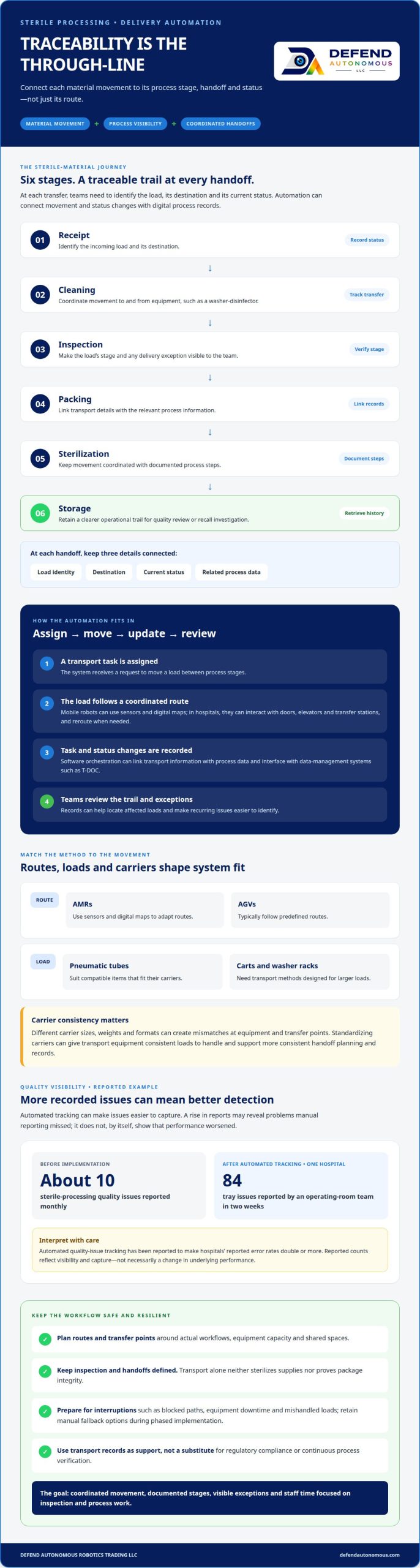
Medical sterile processing moves instruments through receipt, cleaning, inspection, packing, sterilization and storage. At each handoff, teams need to identify the load, its destination and its current status. Automation can connect these movements to digital records, improving process visibility and helping teams retrieve relevant information during a quality review or recall investigation.
Traceability depends on more than a robot’s route. A coordinated system can record transport requests and status changes, linking task information with process data. Software orchestration can also interface with data management systems such as T-DOC. This creates a clearer operational trail across equipment and transfer points, while continuous process verification can help document whether defined steps were completed.
Automated delivery differs from manual transport in how movement is assigned and monitored. Staff carry or push loads between stages; automated systems can receive transport tasks and move loads along planned routes, reducing repetitive handling. Pneumatic tube systems suit compatible items that fit their carriers, while carts and washer racks need transport methods designed for larger loads.
Compare system offerings by their navigation and coordination features. Autonomous mobile robots use sensors and digital maps to adapt their routes, while automated guided vehicles typically follow predefined routes. In a hospital, mobile robots can interact with doors, elevators and transfer stations, then reroute when needed. Software integration and compatibility with load carriers also affect system fit.
These distinctions matter in complex operations. For example, a CSSD handling carriers of different sizes, weights and formats may need standardized carriers before automated movement can work smoothly. Standardization gives transport equipment consistent loads to handle and helps avoid mismatches at washer-disinfectors, inspection stations and packing areas. It also provides a more consistent basis for planning and recording handoffs.
Workforce pressure is another consideration. Automation can take on repetitive transport while staff focus on inspection and process tasks that require attention. The goal is not simply to move instruments faster, but to coordinate movement with documented stages, make exceptions visible and support a traceable workflow. Transport records do not replace regulatory compliance.
Production efficiency, quality and worker safety
In healthcare, automated transport can reduce repetitive handling and make movement between process stages more predictable. Its value depends on protecting package integrity while supporting inspection, reporting and safe workflows.
Efficiency and Worker Safety
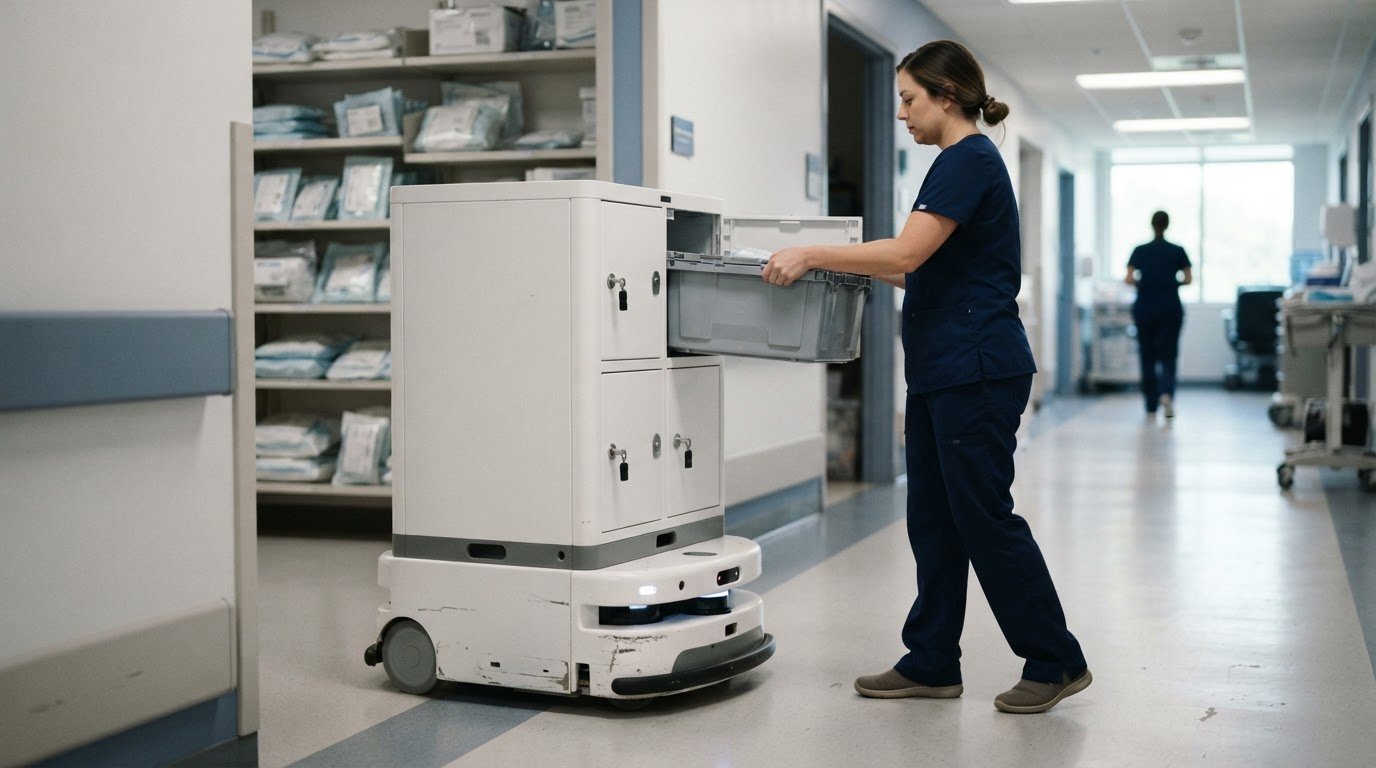
Automation moves loads between equipment and workstations, reducing manual transport tasks and avoidable lifting. For example, a robot can deliver washer racks to a washer-disinfector, then move completed loads onward. This can free staff time for inspection and other process work. Efficiency depends on matching routes, transfer points and equipment capacity to the actual workflow.
Worker safety also depends on how people and mobile platforms share space. Clear transfer points and coordinated routes help reduce unnecessary handling and conflicting movement. Automation can support safer, more consistent transport, but teams still need to manage blocked paths, load handling and equipment interruptions.
Traceability and Quality Control
Traceability supports quality control by connecting a delivery with its status, destination and related process records. If a concern arises, these records can help teams identify affected loads and narrow the review. Automated reporting can also make recurring issues easier to spot and address.
Reported issues may rise when tracking makes them easier to capture. Automated quality-issue tracking has been reported to make hospitals’ reported error rates double or more. At one hospital, an operating-room team reported 84 tray issues in two weeks after automated tracking. Before implementation, teams reported about 10 sterile-processing quality issues monthly. Better visibility can reveal problems that manual reporting missed, rather than indicating that performance worsened.
Maintaining Sterility During Delivery
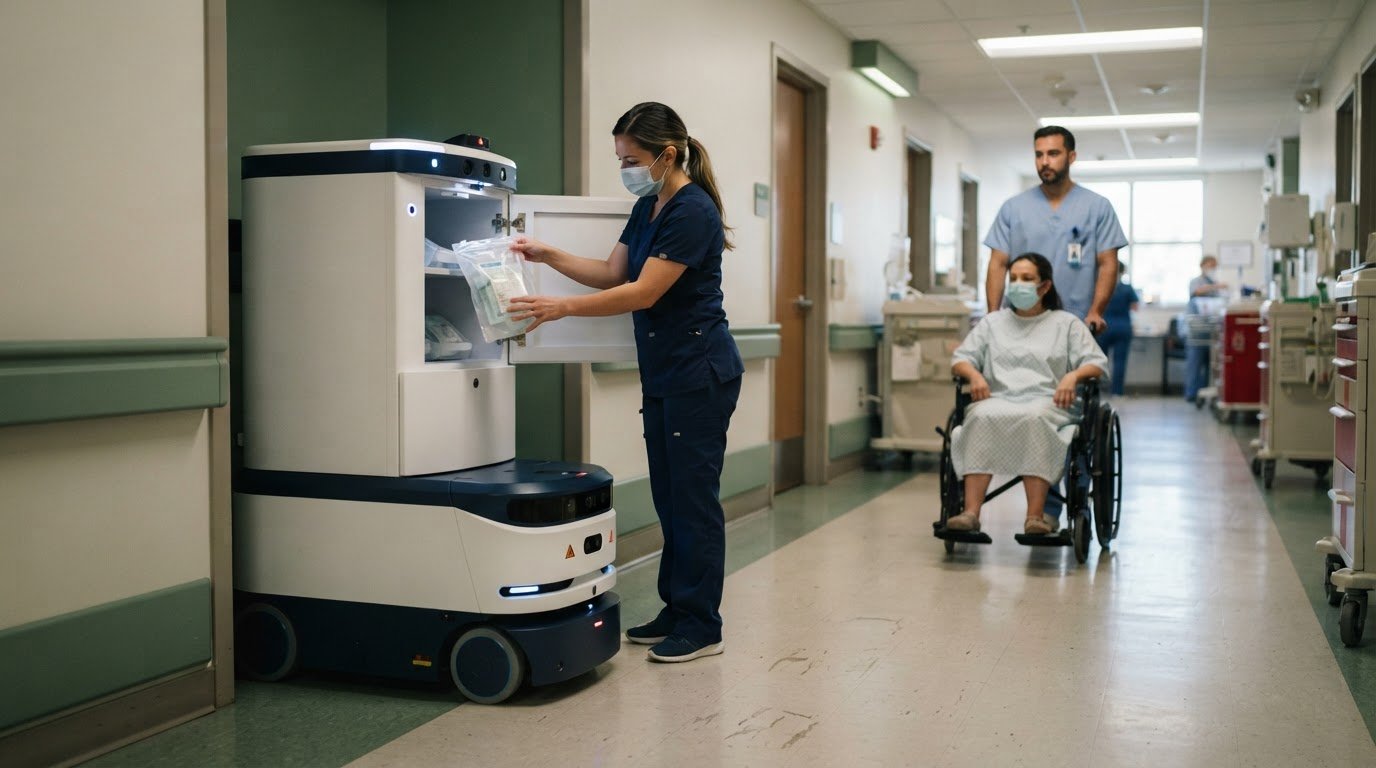
Automated systems support sterile delivery by moving packaged supplies without requiring staff to carry every load between stations. They can reduce manual contact with packaged items, but transport alone neither sterilizes supplies nor proves package integrity. Defined handoffs and inspection points remain necessary so teams can identify damaged packaging or a delivery exception.
Benefits include reduced repetitive handling and more predictable movement; limitations include dependence on functioning equipment, suitable routes and clear transfer procedures. Contamination risks can arise if packaging is damaged or loads are mishandled. Equipment downtime, blocked routes and poorly coordinated handoffs can disrupt delivery. Medical delivery automation can be considered as part of a workflow designed around these controls.
Phased implementation and manual fallback options
A phased rollout introduces sterile-processing automation in defined areas before expanding across the department. This lets teams evaluate workflow performance, equipment interactions and staff handling under operating conditions. CSSDs can introduce automation incrementally while retaining manual fallback options, helping manage implementation risk and support staff acceptance.
Start with a defined transport loop, such as moving racks between a washer-disinfector and an inspection station. Simulation tools can test throughput assumptions, estimate how many robots are required and assess layout decisions before installation. These models can expose route conflicts or transfer-point constraints early, when changes are easier to incorporate into the integrated design.
Each phase should define what is being introduced and how success will be assessed. For example, a rollout could evaluate:
- Route performance: whether devices can reach transfer points without obstructing staff or equipment.
- Process coordination: whether the machine receives loads at the right stage and connects with existing systems.
- Manual continuity: whether staff can resume transport if a robot or interface becomes unavailable.
Manual fallback needs a defined role in the operating model, not an improvised response. Teams need clear responsibility for a paused task, a known route for the load and a way to preserve its process status. For instance, if an automated transfer stops before inspection, staff should know where the load remains and how its handoff is recorded. This clarity supports accuracy during interruptions.
Expansion should follow only after the current phase demonstrates stable movement and workable handoffs. Teams can use observed delays, missed transfers and equipment interactions to refine routes or procedures before adding devices. This helps distinguish a system limitation from a layout or workflow issue. It also gives staff time to build familiarity while maintaining manual capacity during the transition. Phased deployment makes performance measurable against the department’s actual operating needs, rather than relying only on design assumptions.
Potential effects on workflow coordination and staff handling demands
In a sterile processing department, transport affects how work moves between cleaning, inspection, sterilization and storage. Coordinated software can align transport requests with equipment availability and clinical priorities, giving teams a clearer view of work in progress.
Rather than treating each request as a separate task, an orchestration platform can receive requests, assign transport and prioritize loads by deadline or clinical demand. For example, a load needed for planned surgical activity can take priority over a less time-sensitive movement. This connects transport decisions to the sequence of work, not just the nearest available task.
Coordination also affects equipment use. If a washer load is complete but remains in place, the next cycle may be delayed. Software can coordinate the removal of completed loads, helping prevent equipment blockages and idle time caused by late material movement. Staff gain visibility into the workflow, while transport tasks align with equipment status.
The effect on staff handling depends on where transport consumes time and attention. Moving racks or carts between soiled intake, washer-disinfectors and clean work areas can involve repetitive handling. Automating these movements can reduce manual transport steps and make sequencing more predictable. Staff still need to manage exceptions and complete inspection and processing tasks.
Facilities can improve workflow by matching task priorities to their operating environment. A department with distinct clean and soiled routes has different coordination needs from one with shared corridors or closely spaced stations. Clear destination data, realistic deadlines and synchronized equipment availability help software assign useful tasks. Real-time visibility can also show where work is waiting, allowing teams to respond before delays affect downstream stages.
For delivery planning, define the handoffs, priorities and workflow applications that matter most to your department. Discuss your workflow coordination requirements as part of evaluating automation needs.
Defend Autonomous Robotics Trading LLC: Medical & Delivery robot solutions
Defend Autonomous Robotics Trading LLC offers Medical & Delivery robot solutions for organizations assessing automated movement in medical environments. Where sterile supply workflows involve repetitive transport between defined handoff points, delivery robotics can form part of a broader operational solution.
The next step is to align the automation concept with the facility’s workflow: which materials move, where transfers occur and how staff handle exceptions. These requirements help shape a solution around operational needs, rather than treating robot movement as a standalone objective. For facilities considering different automation approaches, AMR & AGV Automation Solutions are also part of the company’s offering.
Contact Defend Autonomous Robotics Trading LLC to discuss your medical delivery automation requirements.
Advance the next stage of your sterile delivery automation
Design the next phase around the operational change that matters most: clearer movement, better visibility or reduced handling pressure. Assessing routes, handoffs and exception procedures can help turn automation goals into practical system requirements. Teams can then define an approach that fits existing workflows and supports future development.
Defend Autonomous Robotics Trading LLC offers AMR & AGV Automation Solutions, alongside AI Coffee & Beverage Robot and CNC & advanced manufacturing solutions. These offerings span automation and robotics, while Medical & Delivery robot solutions are the most directly relevant to medical supply movement.
Take the next step by outlining the delivery workflow you want to improve and the constraints the system must address. Contact Defend Autonomous Robotics Trading LLC to discuss your requirements and move toward a more coordinated automation plan.
Frequently Asked Questions
What is sterile delivery automation in healthcare?
Sterile delivery automation uses robotic systems to transport sterile medical supplies within a healthcare facility. It can move packaged instruments or other loads between designated departments and handoff points, reducing reliance on manual delivery. The technology supports movement and workflow coordination, but it does not sterilize supplies or replace the processes that establish sterility. Its role is to connect delivery with the facility’s existing handling procedures.
What technologies are used for sterile delivery automation in hospitals?
Hospitals can use autonomous mobile robots (AMRs), automated guided vehicles (AGVs) and software to coordinate transport tasks. AMRs use LiDAR, laser SLAM, safety scanners and navigation software to map facilities and calculate routes. AGVs follow configured routes using guidance methods such as laser or QR navigation, depending on the model. The right approach depends on routes, handoffs, load types and integration needs.
What steps does a provider follow when implementing sterile delivery automation in a hospital?
A provider typically follows a defined project sequence: consultation and requirement analysis, solution design and simulation, system integration and testing, installation and commissioning, training and handover, then after-sales support and maintenance. For example, the design stage can map intended delivery routes and handoff points before installation. Testing evaluates system interactions in the planned environment, while training prepares staff to use the solution.
What regulations and standards apply to sterile medical supply handling and automated delivery in the United States?
Applicable requirements depend on the supplies, sterile-processing activities and facility procedures. Distinguish the controls governing processing, packaging, storage and handling from the technical design of delivery equipment. Automation does not establish sterility or replace facility protocols. Hospitals should align system workflows and documentation with applicable obligations, then define how staff manage damaged packaging, delivery exceptions and process records.
Which vendors offer sterile delivery automation systems, and how do their features compare?
Autonomous mobile robots use sensors and digital maps to navigate dynamically and reroute around changing conditions, while automated guided vehicles typically follow predefined routes. Both can interact with hospital doors, elevators and transfer stations.