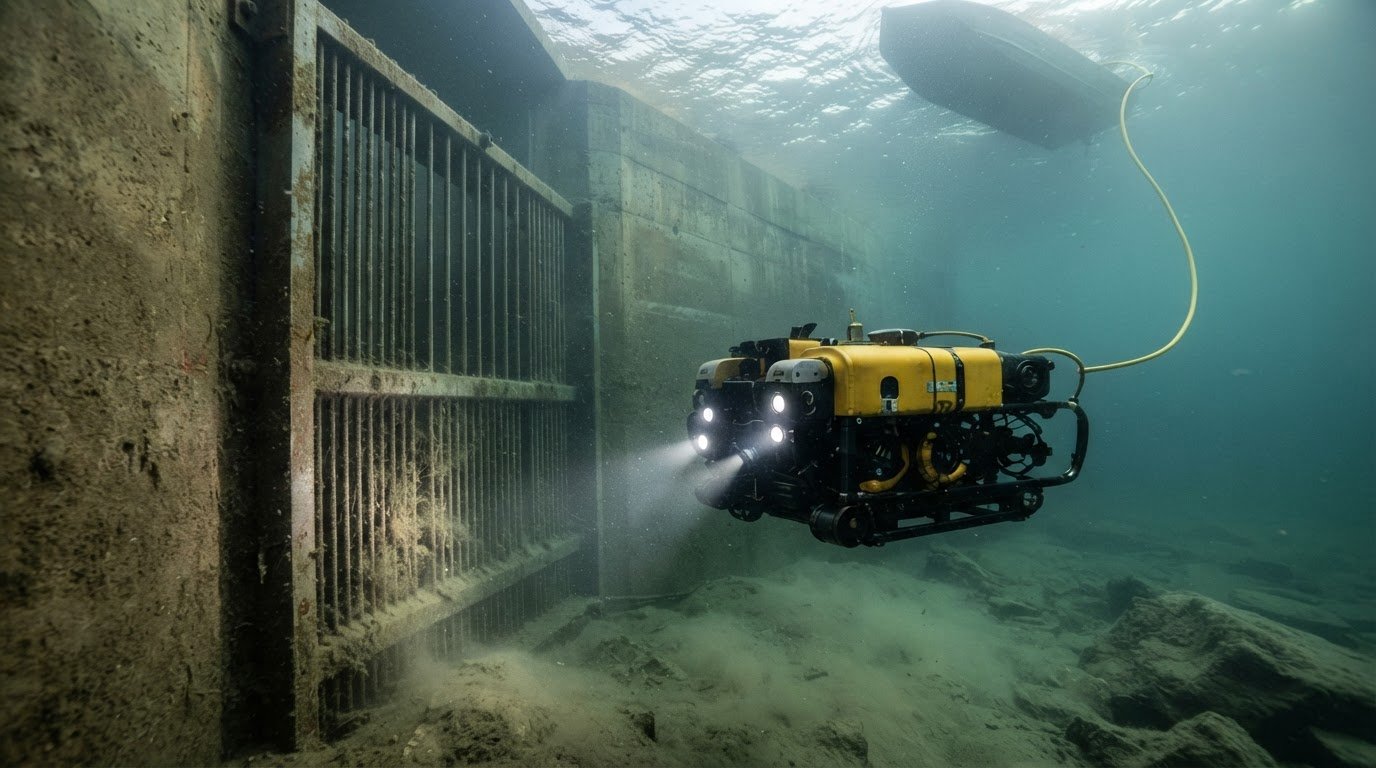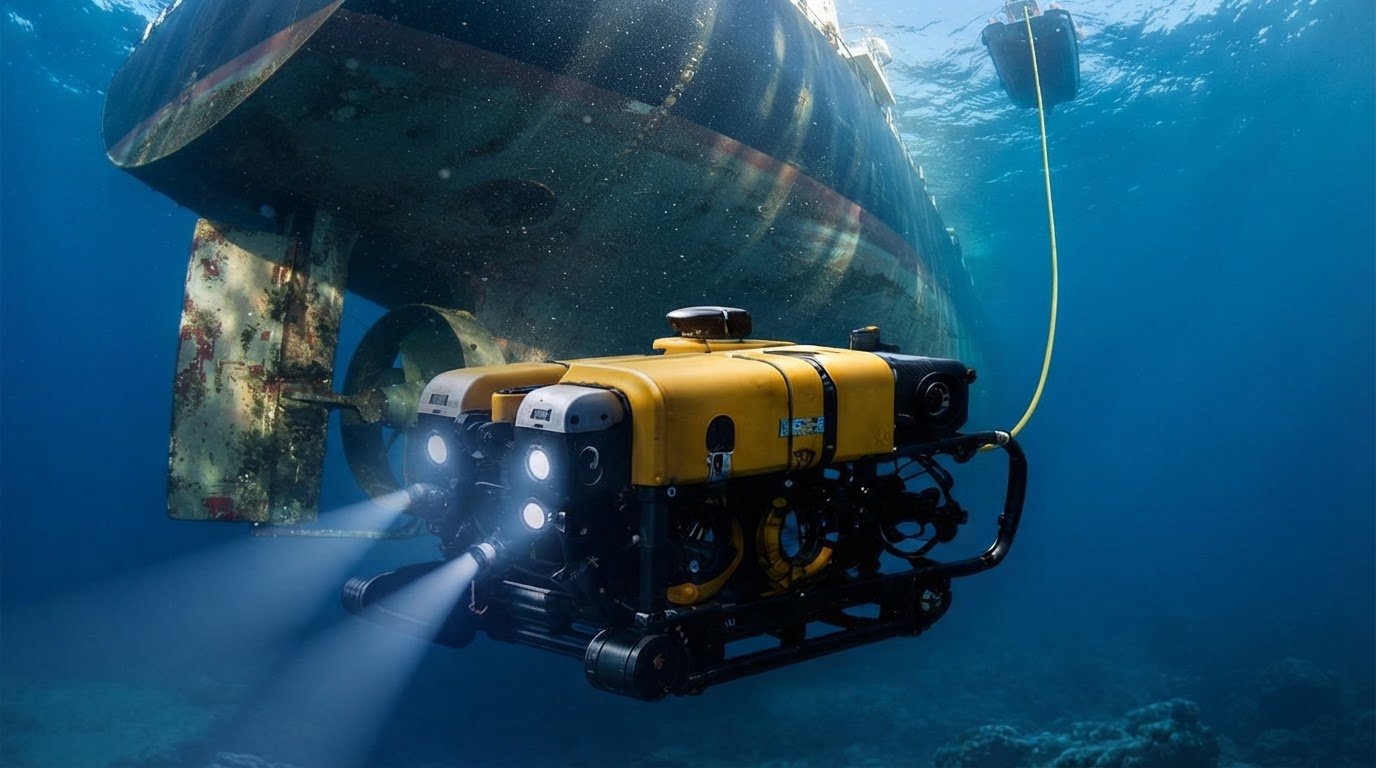
An underwater ROV has no single standard cost: the investment depends on the vehicle class and the demands of the mission. Marine ROV solutions can range from compact observation platforms to heavy work-class systems, with depth capability, sensors, tooling, tether, and launch-and-recovery equipment shaping the required configuration. A project-specific price depends on the case and is provided after a quote request.
That variation matters when comparing systems. A platform for habitat footage has different requirements from one intended for demanding subsea work. The right configuration balances mission needs with deployment and operating conditions. This article explains how ROV types differ, what shapes their cost, and how they support environmental monitoring, habitat mapping, infrastructure inspection, and deepwater operations.
Key Takeaways
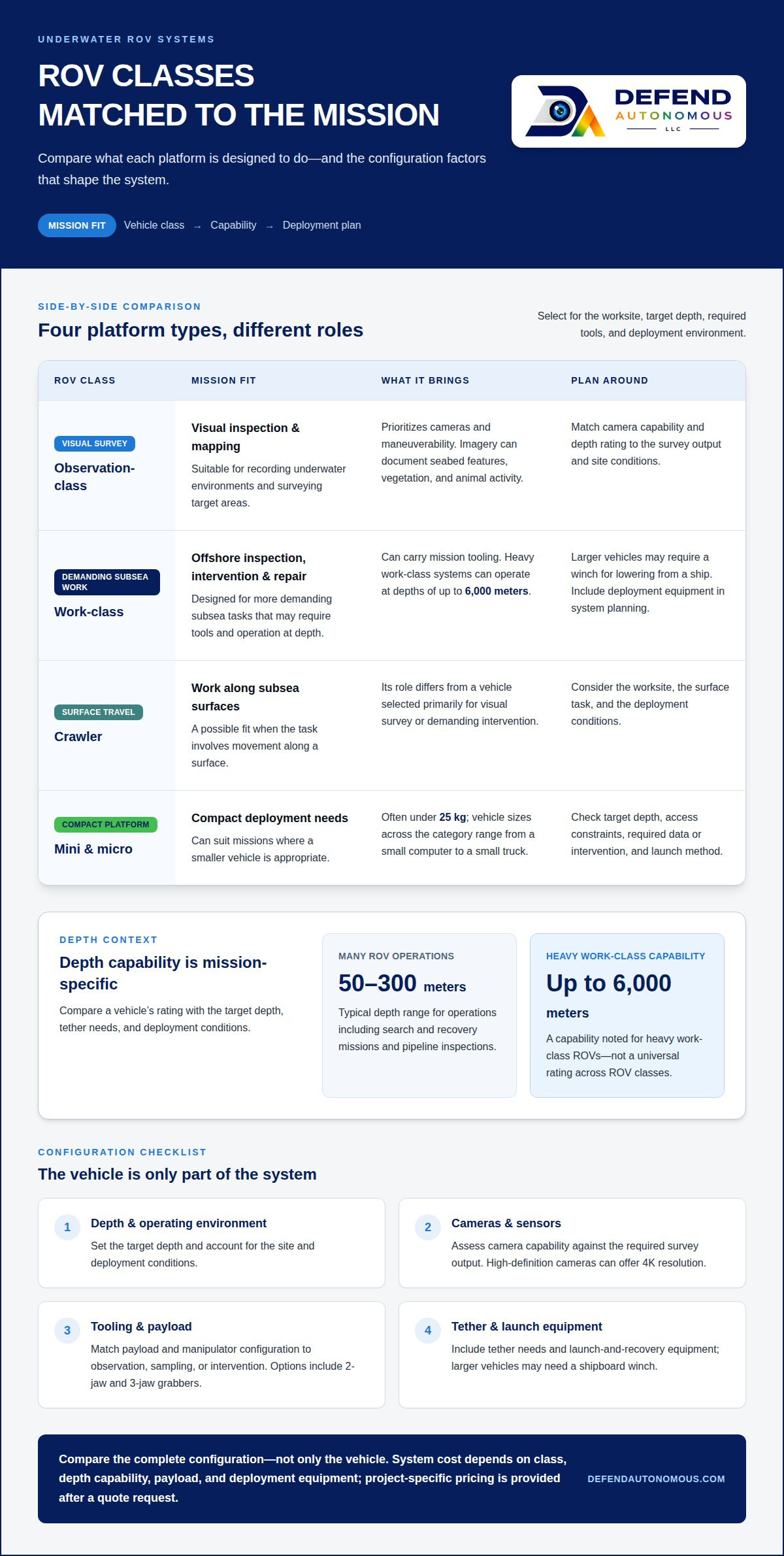
- Match the ROV class to the mission: observation platforms support visual surveys, while work-class systems handle more demanding subsea tasks.
- Compare more than the vehicle itself. Depth capability, sensors, tooling, tether, and deployment equipment all shape the system requirements.
- Combine ROV video with other data to build a clearer picture of underwater habitats and environmental conditions.
- Heavy work-class ROVs can operate at depths of up to 6,000 meters, making vehicle capability central to deepwater planning.
Environmental monitoring and habitat mapping
ROVs collect imagery that researchers can combine with other data to study complex ecosystems. For environmental monitoring, marine ROV solutions help teams document underwater conditions across survey areas. Depth ratings and payload capacity determine where and how each vehicle can operate.
Habitat Observation and Mapping
Habitat observation uses remotely operated vehicles to record underwater environments, while mapping organizes those observations spatially. This helps researchers study ecosystems that are difficult to observe directly. During a survey, operators guide the vehicle across a target area, capturing seabed features, vegetation, and animal activity. Researchers can combine the footage with other data to assess ecosystem conditions and identify locations for closer analysis. These records also make it easier to compare observations across survey areas.
Depth Ratings and Operating Environments
A depth rating describes the underwater range a vehicle is designed to operate within. It matters because offshore environments and research objectives determine how far below the surface an ROV must travel. Many ROV operations, including search and recovery missions and pipeline inspections, typically take place at depths between 50 and 300 meters. That range provides context, but habitat surveys depend on their specific sites. Compare the rating with the target depth, tether needs, and deployment conditions.
For operations in U.S. waters, permit requirements depend on the location and activity. Survey teams should account for the project footprint and whether the work includes sampling or physical intervention.
Cameras and Manipulators as Payloads
Payloads are the cameras, tools, and instruments a vehicle carries for its mission. Buyers comparing marine ROV solutions should assess depth rating, camera capability, and manipulator configuration against the required survey output. High-definition cameras can offer 4K resolution, while 2-jaw and 3-jaw grabbers support precise handling. These options influence whether a platform fits observation, sampling, or intervention. Combined with other measurements, recorded footage can strengthen environmental analysis.
No single manufacturer or model suits every U.S. mission. Compare depth ratings, camera capabilities, and manipulator options to find a configuration that matches the survey environment and payload requirements.
Observation-class, work-class, crawler, mini, and micro ROVs
ROV classes differ in vehicle size, operating capability, and mission demands. The right configuration depends on the worksite, required depth, and tools needed.
Mini and micro ROVs are often under 25 kg, while vehicles range in size from a small computer to a small truck. Observation-class systems focus on visual inspection and mapping; crawlers suit tasks that require movement along subsea surfaces. Work-class vehicles support more demanding operations. Choosing among marine robotics and underwater ROV suppliers in the UAE for inspection, research, salvage, or offshore work means matching these capabilities to the mission and deployment environment.
Work-Class ROV Systems
Work-class ROV systems are larger vehicles configured for demanding subsea tasks. Their ability to carry tools and operate at depth matters for offshore work that may involve inspection, intervention, or repair. Heavy work-class ROVs can operate at depths of up to 6,000 meters. Larger vehicles may also require equipment such as a winch for lowering them from a ship, affecting deployment planning and system requirements.
System cost depends on vehicle class, depth capability, payload, and deployment equipment; pricing is provided after a quote request. A light work-class ROV and a heavy work-class system serve different operational needs, so compare the complete configuration rather than the vehicle alone.
Choosing a ROV for Different Tasks
Choosing an ROV means matching its configuration to the task, site, and desired outcome. For visual inspection or research mapping, observation-class vehicles can prioritize cameras and maneuverability. Pipeline repair or offshore intervention may require work-class capacity and suitable tooling. A crawler may suit work along a surface, while mini and micro vehicles can meet compact deployment needs.
Before selecting a system, define the target depth, access constraints, required data or intervention, and launch method. Then match the vehicle’s rating and payload to those needs. The ROV pilot also needs a practical surface deployment plan, particularly when a larger vehicle requires a winch.
What Are Underwater ROVs Used For?
ROVs support habitat observation, infrastructure inspection, scientific exploration, and education. Their cameras capture underwater conditions in places that may be difficult or unsafe for divers to reach.
Observing Underwater Habitats
Habitat observation uses an ROV’s cameras to record underwater landscapes and marine life. Researchers examine the footage to document features below the surface and assess ecosystem conditions. For example, a science team can steer an ROV across a seabed and compare its video with other survey data. This combined view supports habitat studies and provides material for later analysis.
Inspection and Survey Tasks
ROVs inspect subsea infrastructure and collect visual information along a planned survey route. For example, a pipeline inspection can use video to document visible sections and identify areas for closer review. Operators guide the vehicle underwater, allowing the inspection to cover areas beyond a diver’s immediate reach. Survey teams can also use the footage as a visual record of structures or seabed features.
Underwater archaeology and shipwreck exploration use ROV footage to document sites without requiring divers to approach every feature. A pilot can guide cameras around a wreck, recording its visible structure and the surrounding seabed. Researchers can review the footage to identify areas for further study and preserve a record of site conditions during the survey.
Underwater positioning technologies link images and observations to the vehicle’s location. Acoustic positioning can track an ROV relative to its support vessel or seabed references. During a wreck survey, teams can associate camera footage with mapped areas. Location data helps organize and compare observations across repeated survey passes.
ROVs also support educational programs and live connections to scientific expeditions. They can investigate places too deep for people to dive safely and stay underwater longer than human divers. This lets researchers and students observe exploration as it happens, while recorded footage preserves details for later review.
Deepwater and ultra-deepwater ROV operations
Deepwater missions depend on suitable depth capability, tether management, and coordinated deployment from a vessel. Plan the operating area and task, match the vehicle to the required depth, then coordinate launch, piloting, and recovery.
ROV Operating Depths
An ROV’s operating depth is the maximum depth its design is intended to support. It matters because the vehicle, tether, and deployment system must suit the mission environment. Heavy work-class ROVs can operate at depths of up to 6,000 meters. At those depths, the selected vehicle’s rating guides system planning, while the operating site and task determine the needed payload and deployment approach.
Challenges During ROV Operations
Operational challenges include tether management, maintaining communication, and coordinating the vehicle with its support vessel. The tether carries electrical signals between the operator and ROV, so its route and handling affect vehicle movement. Larger systems may need a winch for deployment from a ship. A typical ROV crew consists of three technicians, with coordinated roles for piloting and system operations.
Efficiency also depends on matching the vehicle to the task. A planned inspection route, appropriate camera, and suitable manipulator can focus the operation on the required observations or handling. ROV operators remain on deck, which generally makes these operations simpler and safer than occupied-submersible or diving operations. Coastal and offshore deployments still need planning around the site and vessel setup.
Planning and Conducting Safe Missions
A safe mission plan connects the target area, required work, vehicle capability, and deployment method. First define the survey or intervention objective, then match the depth rating, tether, payload, and launch equipment to it. Before deployment, coordinate team roles and the planned route. During the mission, the pilot controls the vehicle from the surface and monitors its progress against the task.
Recovery completes the operation and returns the vehicle to the vessel for review and preparation. This structured sequence helps the crew perform the planned work while maintaining control of deployment and vehicle movement. For project-specific requirements, explore marine and subsea solutions.
Defend Autonomous Robotics Trading: AMR & AGV Automation Solutions
Defend Autonomous Robotics Trading provides Marine & Subsea Solutions, including ROV solutions, for organizations planning underwater inspection, research, or offshore operations. This offering is suited to missions requiring a remotely operated vehicle and supporting subsea systems. The right configuration depends on operating depth, payload, deployment conditions, and the work the vehicle must perform.
For organizations coordinating marine technology with wider operational needs, Defend Autonomous Robotics Trading also offers AMR & AGV Automation Solutions, CNC and advanced manufacturing solutions, and EV charging and sustainable energy solutions. These offerings address distinct requirements, from autonomous material movement to manufacturing and energy infrastructure.
Share your subsea mission objectives with Defend Autonomous Robotics Trading to discuss a suitable ROV solution. Contact the team to take the next step.
Turn Mission Requirements Into a Project Direction
The next step is to turn your subsea objective into a clear project brief. Define the outcome you need, the operating environment, and the role the vehicle must perform. A focused brief helps align system selection with deployment planning and the information or intervention your team requires. A well-scoped plan for marine ROV solutions also gives stakeholders a shared basis for evaluating operational priorities.
For organizations considering broader automation alongside subsea work, Defend Autonomous Robotics Trading LLC also offers AMR & AGV Automation Solutions, an AI Coffee & Beverage Robot, and CNC & advanced manufacturing solutions. These offerings address distinct operational needs beyond marine missions.
Discuss your project direction and automation objectives with Defend Autonomous Robotics Trading LLC. Contact Defend Autonomous Robotics Trading LLC to begin a conversation and move your plans forward.
Frequently Asked Questions
How Much Does an Underwater ROV Cost?
There is no single standard cost for an underwater ROV. The price depends on the project, and key cost factors include vehicle class, depth capability, payload, tether, and deployment equipment. A compact platform and a heavy-duty system serve different missions, so compare the full configuration with the planned work rather than judging the vehicle alone.
How many people make up an ROV crew?
A typical ROV crew consists of three technicians. The team coordinates vehicle control, tether handling, and mission monitoring from the surface vessel. For a pipeline inspection, for example, the crew aligns the vehicle’s progress with the inspection route and maintains communication with the pilot. Clear coordination helps gather consistent footage and manage the operation as a unified system.
What Goes Into a Good Underwater ROV Design?
A good design matches the vehicle’s capabilities to its mission and operating environment. Start by defining whether the task requires visual observation, precise handling, or water-condition measurements. Then assess the depth rating and payload needed for the required outcome. A habitat survey, for example, prioritizes useful visual coverage, while a sampling task also requires suitable sampling equipment.
What Parts Make Up an Underwater ROV?
An underwater ROV system includes the vehicle, a surface control connection, and mission equipment. Common payloads include still and video cameras, lights, manipulators, water samplers, and instruments that measure water conditions. The tether carries electrical signals between the operator and vehicle. For a survey, cameras and lights record the site, while a manipulator or sampler supports precise handling or sample collection.
What are the challenges to ROV operations?
ROV operations require managing tether communication, vehicle movement, and deployment from the support vessel. At greater depths, the system must remain within its operating rating, and larger vehicles may need a winch for launch and recovery. A pipeline survey also requires coordinated movement along the inspection route, so tether handling and piloting must support the planned coverage.
What drives ROV pricing?
ROV pricing is driven by the capabilities and equipment required for the mission. Depth rating, vehicle class, cameras, manipulators, and other payloads shape the configuration, while larger vehicles may also need deployment equipment such as a winch. A system for visual observation has different requirements from one built for subsea handling. The total cost reflects the configured system, not just the vehicle.