Renewable power delivers more when generation, grids and energy use operate as one coordinated system. Integrated renewable energy systems connect sources such as solar and wind with electricity networks, storage and flexible demand, helping energy move where and when it is needed. Renewable integration coordinates how these parts are designed, operated and adapted to provide reliable energy with less environmental impact.
It’s easy to think of renewable energy as a generation challenge: build clean power sources and connect them to the grid. The broader task is to align variable supply with electricity demand while coordinating infrastructure across sectors. This system-level view is why integration matters.
This article explains how renewable integration works and how grid connections, digital management, transport, and heating fit together. You’ll learn how these components interact, why coordination supports reliability, and how sustainable energy infrastructure can support connected operations. Together, they shape the decisions involved in an integrated energy system.
Key Takeaways
- Understand renewable integration as coordination between energy generation, networks and demand, not simply adding more renewable sources.
- Learn how grid capacity, interconnections and digital controls help balance variable generation with electricity needs.
- See how transport and heating can connect to renewable power and create more flexible patterns of energy use.
- Recognize where EV charging and sustainable energy infrastructure can support wider operational energy goals.
What is renewable integration?
Renewable integration coordinates generation, networks, storage, and energy use as one power system. It matches variable output with demand while managing infrastructure across the electricity sector.
Solar, Wind, and Micro-Hydro Power
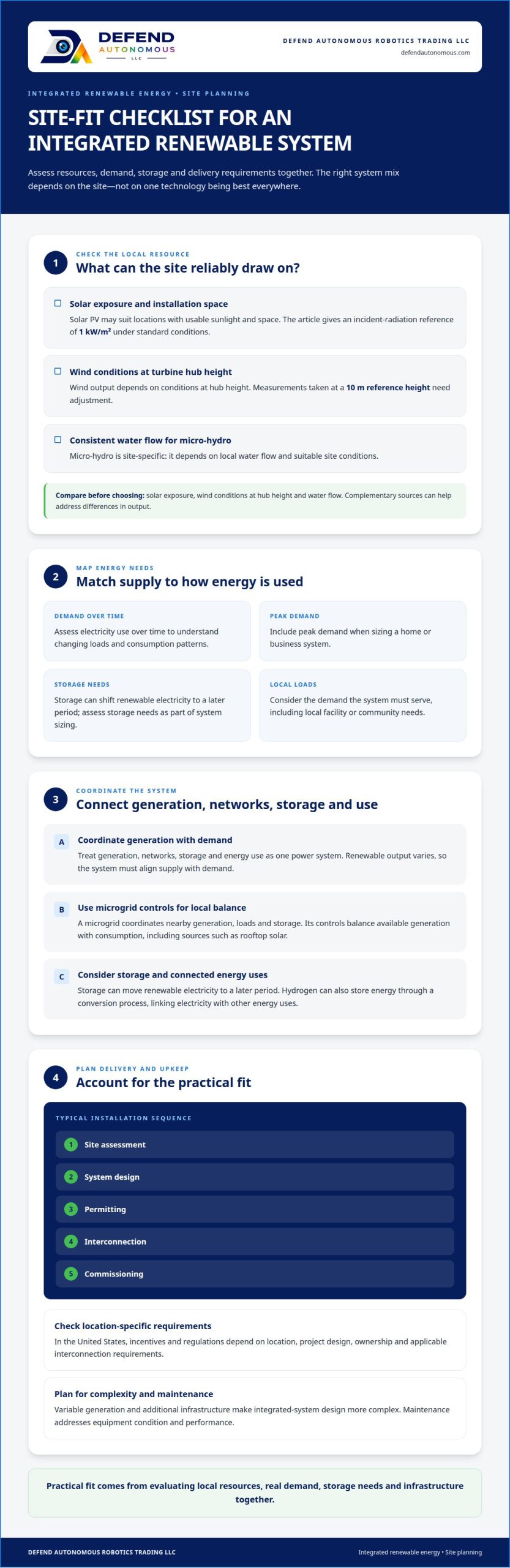
Solar, wind, and micro-hydro are renewable sources that convert sunlight, moving air, and flowing water into electricity. Their different output patterns can complement one another, improving how integrated renewable energy systems serve changing loads. Solar photovoltaic models use an incident-radiation reference of 1 kW/m2 under standard conditions. Wind output depends on conditions at turbine hub height, so measurements taken at a reference height of 10 m need adjustment. Micro-hydro depends on local water flow and site conditions.
Microgrids and Renewable Power
A microgrid is a local electricity network that coordinates nearby generation, loads, and energy storage. It can help facilities manage distributed sources, such as rooftop solar, alongside local demand. Controls balance available generation with consumption, while storage can shift renewable electricity to a later period. Hydrogen can also store energy through a conversion process, linking electricity with other energy uses. The right mix depends on the microgrid’s loads and available sources.
Technology Choices Across Climates and Locations
The most suitable technology for a U.S. site depends on its renewable resources, terrain, and demand profile. Solar PV may suit locations with usable sunlight and installation space, while wind is relevant where local conditions support generation. Micro-hydro requires a suitable, consistent water resource, so it is site-specific. No single technology is best across every U.S. climate. Compare solar exposure, wind conditions at hub height, and water flow before selecting capacity. Combining complementary sources can help address differences in their output.
System Design, Incentives, and Tradeoffs
Size a home or business system by assessing electricity use over time, peak demand, local resources, and storage needs. In the United States, incentives and regulations depend on location, project design, ownership, and applicable interconnection requirements. Integrated systems can coordinate supply and demand, but variable generation and additional infrastructure make design more complex. Installation typically involves site assessment, system design, permitting, interconnection, and commissioning. Maintenance then addresses equipment condition and performance. Together, these factors determine a system’s practical fit.
Renewable energy integration with the electricity grid
The electricity grid must balance renewable generation with demand across transmission lines, distribution networks, and system operations. At the end of 2020, renewables supplied around 29% of global electricity generation, while solar PV and wind produced more than 9%. Variable output changes with weather, so operators forecast production and adjust dispatch, flexible loads, or storage. Several power systems reached record variable-renewable penetration in 2020, underscoring the need to coordinate supply and demand.
That coordination shapes grid planning and performance. Generating 35% of U.S. electricity from wind and solar would reduce carbon emissions by up to 45%. The power must also reach consumers: PNNL researchers are laying groundwork for transmission decisions to integrate up to 80 GW of offshore wind along the Atlantic coast. Wind can cool transmission lines, and dynamic line ratings account for that effect, allowing greater wind generation on existing infrastructure.
Remote communities face a distinct planning challenge: connecting local energy resources with demand when extending transmission infrastructure may be difficult. A study modeled integrated renewable energy scenarios for electricity and cooking across seven unelectrified villages in Almora district, Uttarakhand, India. It illustrates how village electrification planning can assess local generation alongside community needs. For rural systems, demand patterns, available resources, and the role of backup generation all influence design.
Wholesale electricity market design also affects how renewable power operates. Market rules shape how generators sell electricity, how balancing services are valued, and when flexible demand participates. Signals for surplus and scarcity can guide dispatch as renewable generation varies and fossil-fuel generation changes its role. Fleet operators can align charging schedules with periods of renewable abundance while maintaining vehicle availability. For organizations connecting transport and sustainable power, EV charging and sustainable energy solutions relate grid planning to charging infrastructure.
Grid interconnections and digital management
Interconnections link renewable generators, storage, and consumers across transmission and distribution networks. Planning, operational controls, and digital monitoring help manage changing flows across each region.
Grid Flexibility and Ancillary Services
Grid flexibility is the ability to adjust supply, demand, or network operation as conditions change. Ancillary services help stabilize operation through functions such as balancing and voltage control. The U.S. Department of Energy’s Interconnection Innovation eXchange provides technical assistance for connecting solar, wind, storage, electric-vehicle charging facilities, and hybrid combinations. These connections allow operators to coordinate diverse energy sources rather than treating each generator as an isolated asset.
Reliability and Resilience
Reliability means the grid can deliver electricity during normal operation; resilience concerns its ability to withstand and recover from disruptions. Grid-forming inverters can allow inverter-based sources to restart the grid independently, supporting recovery when conventional generation is unavailable. Planning also matters: transmission studies assess whether new lines are needed, whether existing infrastructure can be used, and how project benefits relate to connection timelines. The U.S. Department of Energy’s CORE initiative aims to reduce the cost of high-voltage direct-current voltage source converter transmission systems by 35% by 2035. Such systems can support long-distance transfers between regions.
Safety, Environmental, and Connection Risks
Owners should assess electrical, environmental, and interconnection risks before connecting generation or storage. Electrical design needs to account for equipment protection, fault response, and safe isolation; thermal conditions can also affect equipment operation. Site planning should consider environmental impacts around facilities, access routes, and nearby habitats, including where wind turbines are proposed. Connection studies examine available network capacity, power flows, and the system’s ability to accommodate the project. Upfront transmission planning helps weigh new infrastructure against use of existing lines. These factors influence project design and grid reliability.
Integration of renewables in transport and heating
Transport and heating connect renewable electricity to uses beyond conventional grid demand. Fleet charging, thermal loads, and transmission access all influence how a power system absorbs clean generation.
At a fleet depot, charging schedules can shift toward periods when renewable electricity is available, while battery storage can help manage timing differences. This coordination links vehicles to the wider power system instead of treating chargers as isolated loads. Heating offers another flexible connection: heat pumps and recovered heat can use electricity or thermal energy when supply and demand align. The European Commission reports that heating and cooling account for half of the European Union’s energy consumption, making this sector central to energy integration.
Denmark provides a practical example of linking heat and energy operations. At Sygehus Sønderjylland, an energy transformation cut energy use by 18,300 MWh and supplied surplus heat to 900 households. Heat recovery can therefore connect facility operations with district heating, reducing wasted energy and extending its value beyond one site. These projects show how coordinated infrastructure can support economic and environmental objectives alongside lower carbon energy use.
Generation and new loads also depend on transmission and distribution infrastructure. Transmission adequacy means having pathways to carry power from renewable resources to demand; access depends on available network capacity and connection planning. High-voltage direct-current transmission can move electricity over long distances and link regions, complementing local distribution networks. Planning weighs new lines against existing infrastructure, project benefits, and ways to expedite interconnection. These decisions affect whether renewable generation and charging loads can connect where needed.
For organizations aligning fleet charging with sustainable power, explore EV charging and sustainable energy solutions as part of a broader infrastructure strategy.
Defend Autonomous Robotics Trading: AMR & AGV Automation Solutions
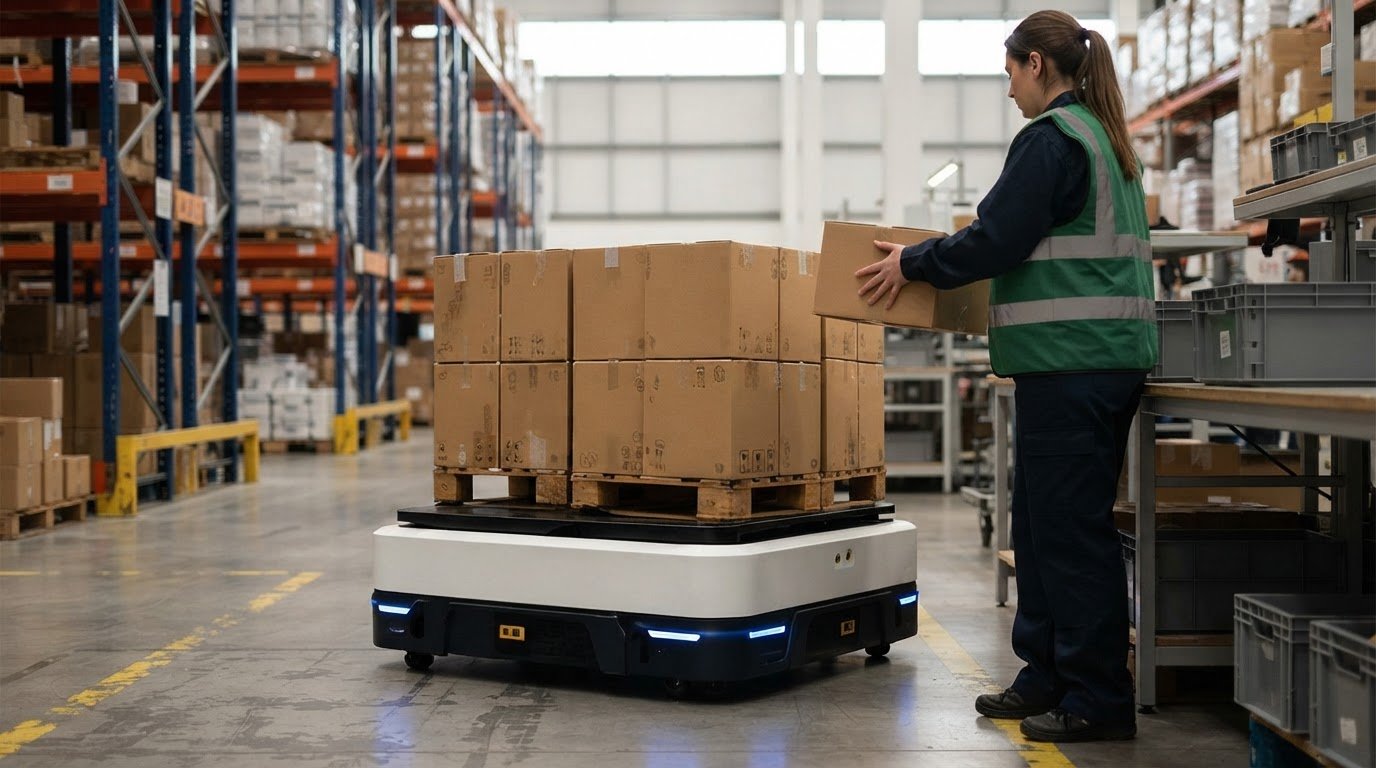
Defend Autonomous Robotics Trading offers AMR & AGV Automation Solutions and EV charging & sustainable energy solutions for organizations planning connected operational infrastructure. These offerings are relevant when fleet charging and automation both form part of a broader facility strategy. Aligning requirements early helps decision-makers consider energy infrastructure alongside operational needs, rather than treating each as a separate project.
For fleet operators, EV charging and sustainable energy solutions relate directly to the charging infrastructure discussed here. AMR & AGV automation may also suit facilities considering how automation and energy initiatives fit into wider operations. Start with the operational challenge you need to address and how it connects to your energy plans.
Contact Defend Autonomous Robotics Trading to discuss your requirements.
Turn energy planning into operational progress
The next step is to connect energy decisions with the work your facilities need to perform. Consider charging, production priorities, and site operations as part of one planning conversation. This helps teams assess where integrated renewable energy systems fit within broader modernization goals, rather than treating clean power as a standalone upgrade.
Defend Autonomous Robotics Trading LLC supports operational modernization with AI Coffee & Beverage Robot and CNC & advanced manufacturing solutions. These offerings address different facility needs and help decision-makers consider energy infrastructure alongside the systems that support daily operations.
Build a plan around your organization’s priorities and the changes it is preparing to make. Contact Defend Autonomous Robotics Trading LLC to discuss how its solutions align with your operational direction. With a clear view of both energy needs and facility objectives, you can move forward with purpose.
Frequently Asked Questions
What are integrated renewable energy systems, and how do they work?
Integrated renewable energy systems coordinate generation, controls, and electricity use so supply can respond to changing conditions. For example, a facility might combine rooftop solar with grid power and scheduled fleet charging. Controls direct available electricity to loads or storage, while monitoring helps operators adjust charging as output changes. The design depends on the facility’s energy use and operating priorities.
What technologies are commonly combined in integrated renewable energy systems?
Common technologies include solar PV or wind, battery storage, grid connections, and flexible loads such as fleet chargers or building heating. Micro-hydro may suit sites with flowing water, while hydrogen offers another energy-storage pathway. A system doesn’t need every option. Choices depend on local resources, load timing, connection capacity, and operating goals such as resilience or charging flexibility.
How much does it cost to install an integrated renewable energy system in the United States?
Installation costs vary with project scale and configuration. Key factors include generation equipment, battery capacity, site preparation, electrical upgrades, permitting, and grid interconnection. A project-specific price depends on the project and is provided after a quote request. Compare proposals by checking that they cover the same system boundaries, storage scope, and connection work.
How do integrated renewable energy systems compare with standalone solar or wind systems?
An integrated design coordinates generation with other equipment and operating loads, while a standalone solar or wind system focuses on one source. For a warehouse, adding charging schedules or storage to solar creates more ways to align energy use with output. That coordination also adds design and control complexity. A standalone system may suit a site whose needs can be met by one source.
How reliable are integrated renewable energy systems, and what backup storage is needed?
Reliability depends on resource variability, equipment, grid connection, controls, and the loads that must remain available. Storage sizing considers the gap between expected generation and demand, including charging windows, critical equipment, and required backup duration. A grid-connected facility can incorporate the network into its operating strategy. An isolated site needs a different balance of generation, storage, and flexible demand.