The most advanced mobile robot isn’t automatically the right choice. For warehouse automation with AMR and AGV robots in the UAE, the key difference is how they navigate: AGVs follow configured routes, while AMRs map their surroundings and calculate safe routes in real time. AGVs suit repeatable transport; AMRs can adapt their routes to changing conditions.
Choosing between them is only part of the decision. The robot must also fit the load, material flow, facility layout and systems it needs to work with. This guide explains how AMRs and AGVs differ, what to assess when selecting a solution, and how mobile robots can integrate with warehouse and manufacturing automation systems. You’ll also see where each approach fits, so you can focus on the operational requirements that matter most.
Key Takeaways
- Distinguish fixed-route AGVs from AMRs that adapt navigation to changing conditions, then match the robot type to your facility’s material flow.
- Assess manufacturers operating in the UAE by how their solutions fit your application, loads, layout and operating requirements.
- Plan robot integration around the handoffs between mobile robots, ASRS, conveyors, PLCs and SCADA systems.
- Connect warehouse and manufacturing automation to the movement of materials between storage, production and delivery workflows.
What is an autonomous mobile robot (AMR) in a warehouse?
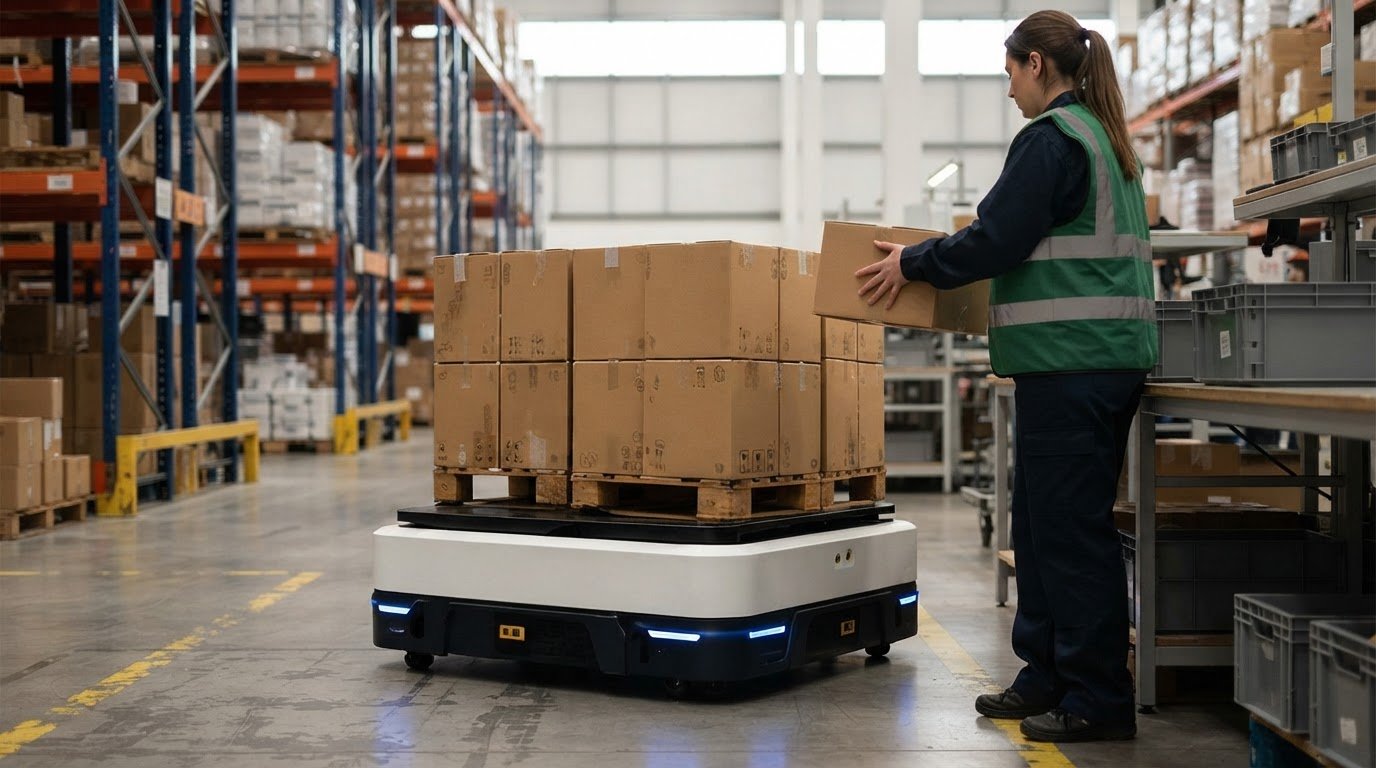
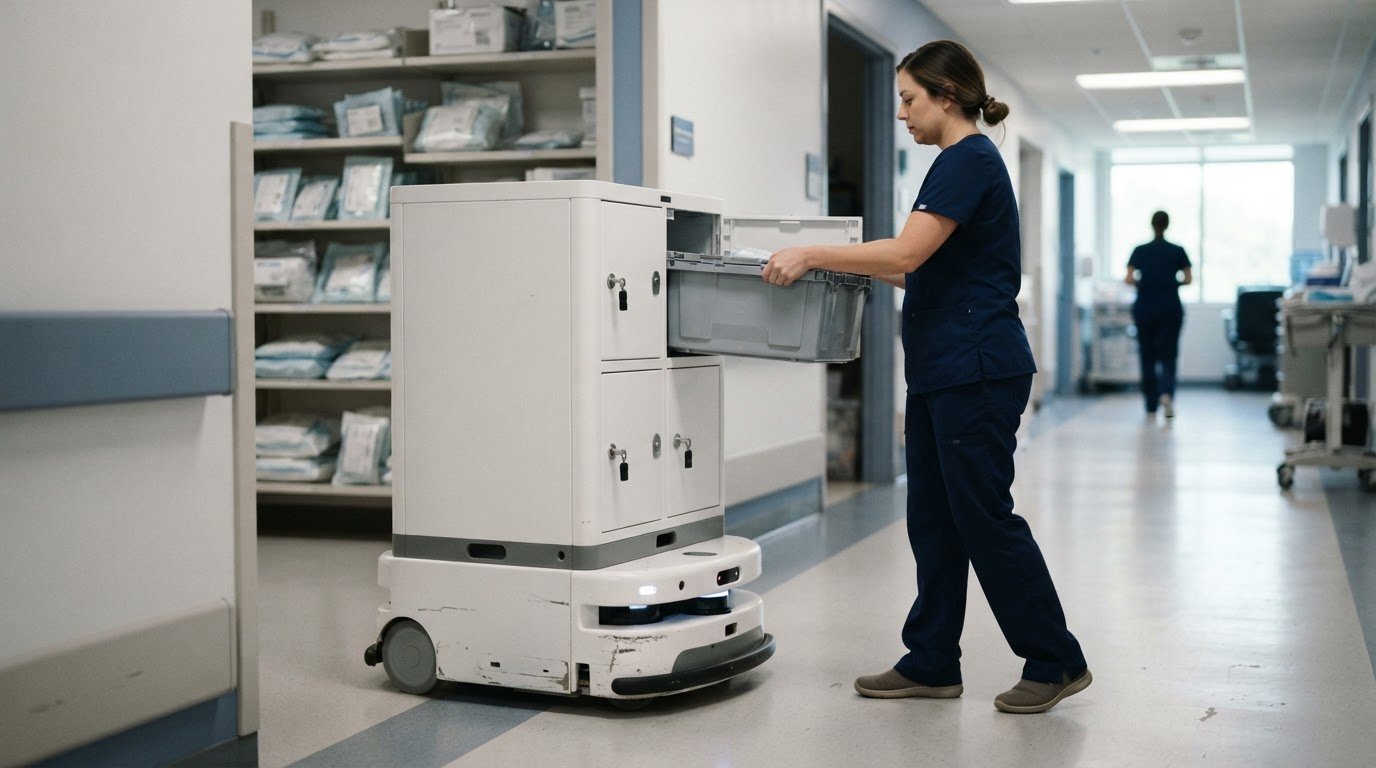
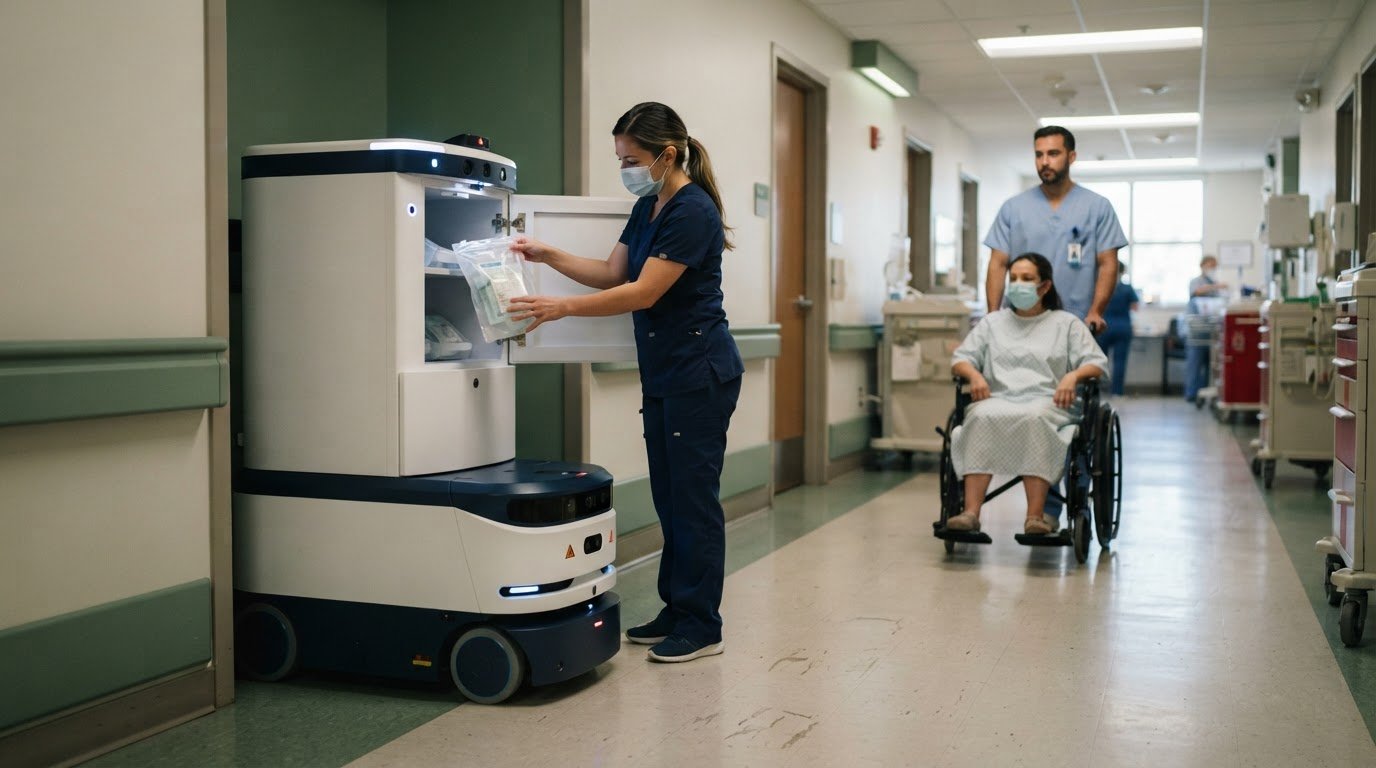
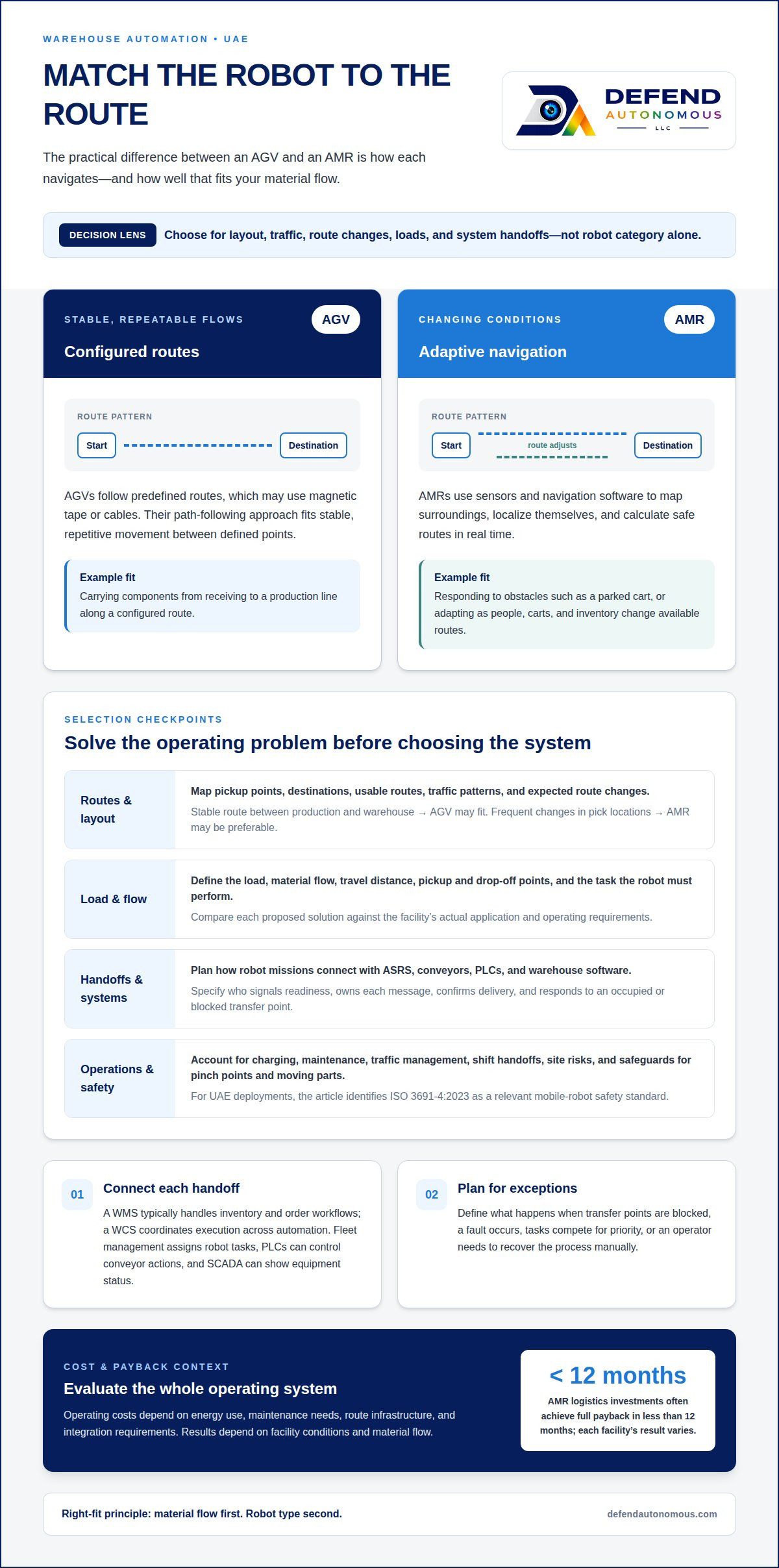
An autonomous mobile robot moves materials through a facility without continuous manual control. The key navigation distinction is that AGVs travel along configured routes, while AMRs use sensors and navigation software to map their surroundings and calculate routes.
AMR Dynamic Navigation
AMRs use LiDAR, laser SLAM, safety scanners and intelligent navigation software to map a facility, localize themselves and calculate safe routes in real time. This lets them respond to obstacles and changing conditions. Their navigation can suit industrial environments where routes and operating conditions change.
Obstacle Avoidance and Autonomous Navigation
Obstacle avoidance helps an AMR respond to temporary obstructions, such as a parked cart, rather than treating its planned route as immovable. AGVs also navigate autonomously, but traditional models follow predefined routes and may use magnetic tape or cables. Their path-following approach suits stable, repetitive movements; an AMR is better suited to changing traffic and obstacles.
| Criterion | AGV | AMR |
|---|---|---|
| Navigation | Predefined routes | Dynamic maps and route adjustment |
| Infrastructure | May require tape or cables | Can navigate without fixed route infrastructure |
| Best fit | Stable, repetitive flows | Changing layouts and obstacles |
Choose by matching the navigation approach to the facility’s layout, traffic patterns and expected route changes.
For UAE warehouse deployments, ISO 3691-4:2023 is identified as a safety standard relevant to mobile robots. Site risk assessment and safeguards for pinch points and moving parts also inform safe system design.
Operating costs depend on the system, its energy use, maintenance needs, route infrastructure and integration requirements. AMR investments in logistics often achieve full payback in less than 12 months, while the result for a facility depends on its operating conditions and material flow.
AMR and AGV manufacturers operating in the UAE
Warehouse automation in the UAE can include material-handling robots using AMR or AGV technology, alongside warehouse systems and other automation equipment. The right solution depends on whether a facility needs adaptable navigation, repeatable transport along configured routes, or both. Assess the operating requirements and system integration needs, not just the robot category.
For a changing warehouse or 3PL operation, AMRs can adapt their navigation as people, carts, and inventory alter available routes. This flexibility can support varied picking and replenishment tasks across different customer workflows. For continuous warehouse operations, the system design also needs to account for charging, maintenance, traffic management, and handoffs between shifts.
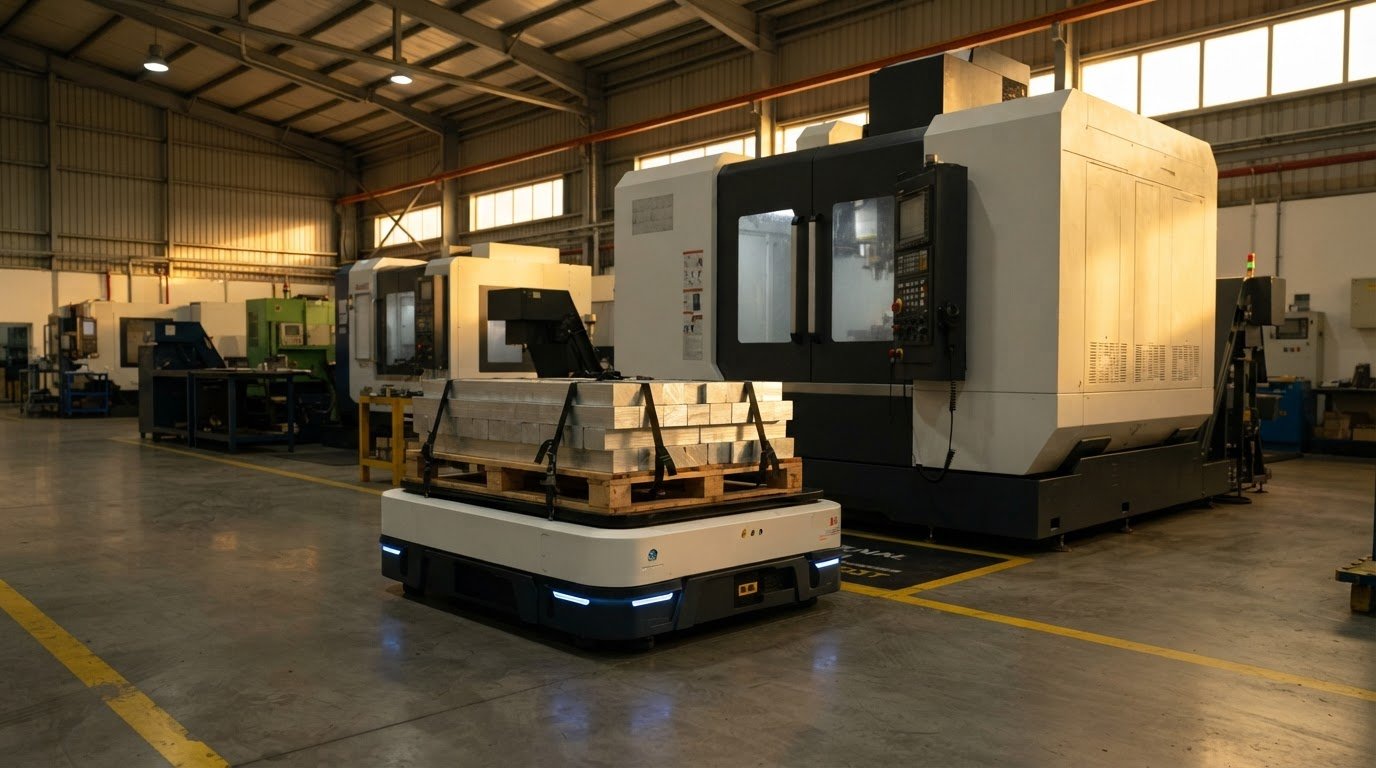
AGVs can suit repeatable material movement between defined points. For example, a facility may use them to carry components from receiving to a production line along a configured route. When assessing an AGV solution, consider the route, load, pickup and drop-off points, travel distance and facility layout.
Warehouse automation systems are relevant to logistics and 3PL, manufacturing, and facilities moving materials between storage and production. A stable route between a production area and a warehouse may suit an AGV; frequent changes in pick locations may favour AMRs. The main deployment challenges are route conflicts, poor handoffs, layout constraints, and connecting robot missions to existing operations.
There’s no single warehouse-size threshold for AMR or AGV deployment. A smaller facility can benefit from automating a clear, repeatable transport task, while a larger site may need coordination across more routes and work areas. Usable routes, traffic, equipment interfaces and safety requirements matter more than floor area alone.
To assess manufacturers and system options, define the material flow first, then map pickup points, destinations, loads, and traffic. Compare each proposed solution against those requirements and its integration needs. For UAE projects, explore warehouse automation options aligned with the facility’s material-handling workflow.
Integration with ASRS, conveyors, PLC and SCADA
Mobile robots create value when their missions connect with warehouse equipment and software. An automated storage and retrieval system (ASRS), conveyor, programmable logic controller (PLC), and supervisory control and data acquisition (SCADA) system each manage different parts of a material flow. Integration defines how a tote or pallet moves between them, which system signals readiness, and what happens when the next station is occupied. For warehouse automation and AMR/AGV robots in the UAE, these handoffs shape how efficiently the systems work together.
Consider a tote leaving an ASRS for a conveyor transfer point. A warehouse control system (WCS) can coordinate equipment tasks, while a fleet management system assigns a mobile robot to collect or deliver the load. The PLC can control conveyor actions, such as starting a belt when the transfer area is clear. SCADA can display equipment status so operators can identify where a stalled handoff needs attention.
A warehouse management system (WMS) typically handles inventory and order workflows; a WCS coordinates execution across automation equipment. AMRs and AGVs need mission information, destinations and status updates that fit those workflows. For example, a completed pick can trigger a transport task, and a robot’s delivery status can inform the next warehouse process. Define which system owns each message to avoid duplicated tasks and missed transfers.
Scalable integration starts with mapping interfaces and handoffs across existing infrastructure. A facility can define one workflow, such as ASRS-to-conveyor transport, then apply the same coordination principles to other storage zones or production areas. Account for fault states, blocked transfer points, task priority and manual recovery. These decisions help the system respond consistently when conditions interrupt a planned route.
Warehouse automation with AMR and AGV robots in the UAE depends on equipment interfaces, software responsibilities and material flow. Document each system’s role, define the events that trigger a task, and test both normal movement and exception handling. This approach connects mobile robots, conveyors, PLCs and SCADA within the same operational workflow.
Warehouse and manufacturing automation
Warehouse automation matters most when it connects storage with production and logistics. The UAE’s Operation 300bn strategy is cited as a driver of automated logistics. A practical starting point is to map where materials wait, travel, and enter production, then identify a recurring movement that guided vehicles or mobile robots could support.
At a manufacturing site described in the operational example, the warehouse sits about 200 meters from production. An operator takes around 7 minutes to collect missing items. That journey illustrates a replenishment task: transport components to the production area when needed, then return with another load. Coordinating these movements can help optimize material flow without treating warehouse and factory automation as separate projects.
AMRs use sensors and dynamic navigation to respond to changing conditions, while AGVs can suit repeatable transfers along configured routes. In either case, align missions with production schedules, pickup points, load types and traffic areas. Clear handoffs help production receive materials while logistics maintains visibility of the next task.
Automation also depends on the site’s operating pattern. Map replenishment, returns and finished-goods transfers, then assess each route for congestion, access and equipment interfaces. Where schedules change frequently, flexible task assignment can help accommodate shifting priorities. For stable movement between defined points, a configured AGV route may be easier to coordinate.
UAE warehouse and manufacturing projects should connect robot tasks to measurable operational needs, not technology alone. The global AGV and AMR market was forecast to grow at a 32.7% compound annual growth rate from 2020 to 2026, but that market projection does not determine a facility’s results. A site assessment should establish its material flows, obstacles, and integration requirements before selecting an automation approach.
Plan warehouse and manufacturing automation around the facility’s material flow, production handoffs, and operating priorities.
Defend Autonomous Robotics Trading
Defend Autonomous Robotics Trading LLC provides AMR and AGV automation solutions for organizations assessing how mobile robots could support warehouse and material-handling operations. Its warehouse autonomous systems can be relevant when a facility is evaluating transport workflows, automation integration, or movement between storage and production. The appropriate approach depends on the operating environment, material flows, and the role robots need to perform.
Turn to Defend Autonomous Robotics Trading LLC when you’re ready to connect AMR and AGV navigation choices with a practical warehouse automation plan. The company also provides CNC and advanced manufacturing solutions, as well as EV charging and sustainable energy solutions for broader operational requirements.
Contact Defend Autonomous Robotics Trading LLC to discuss your warehouse automation requirements.
Build the Next Stage of Your Operation
Warehouse automation with AMR and AGV robots in the UAE is a strategic decision, not simply a vehicle choice. Start by defining the operational outcome, such as smoother replenishment, more consistent material movement or closer coordination between warehouse and production. A clear objective gives the automation plan direction and helps teams evaluate how the technology fits existing workflows.
Translate that objective into a practical starting point. Identify a recurring material flow, its handoff points and the systems that need to coordinate around it. Then align operations, engineering and logistics on the intended outcome. This creates a shared basis for planning deployment and future expansion.
Defend Autonomous Robotics Trading also offers an AI Coffee & Beverage Robot alongside its automation and advanced manufacturing capabilities. For a focused discussion about your operational priorities and next steps, contact Defend Autonomous Robotics Trading. A well-defined starting point can help your team move forward with clarity and confidence.
Frequently Asked Questions
What is the difference between an AMR and an AGV?
An AMR maps its surroundings and calculates routes using technologies such as LiDAR, laser SLAM, safety scanners and intelligent navigation software. An AGV carries out transport along configured routes, using guidance methods such as lasers, QR navigation, magnetic guidance or natural features, depending on the model. The practical distinction is how each navigates within the facility.
What is the difference between AMRs and AGVs for warehouse operations?
AMRs can suit warehouse tasks that shift with changing priorities, such as moving picked orders between variable work areas. AGVs can fit a recurring supply run between receiving and a fixed production point. A 3PL handling different customer workflows may value adaptable task routing, while a production line with consistent replenishment points may benefit from repeatable guided transport.
Which AMR and AGV robot suppliers operate in the UAE?
Defend Autonomous Robotics Trading LLC provides AMR and AGV automation solutions across the UAE, GCC, Europe and Asia. Its AMRs use LiDAR, laser SLAM, safety scanners and intelligent navigation software; AGV guidance methods vary by model. These features help operations teams assess whether the available navigation approaches suit their facility and material-handling needs.
How do AMRs and AGVs integrate with warehouse management systems in the UAE?
Integration connects warehouse priorities with robot transport tasks. For example, when an order requires items from separate storage areas, a workflow can coordinate picking and movement to a consolidation point, then register task completion for fulfillment. Define which system owns inventory changes, task assignment and delivery status. This keeps records aligned with physical movement and clarifies how operators handle exceptions.