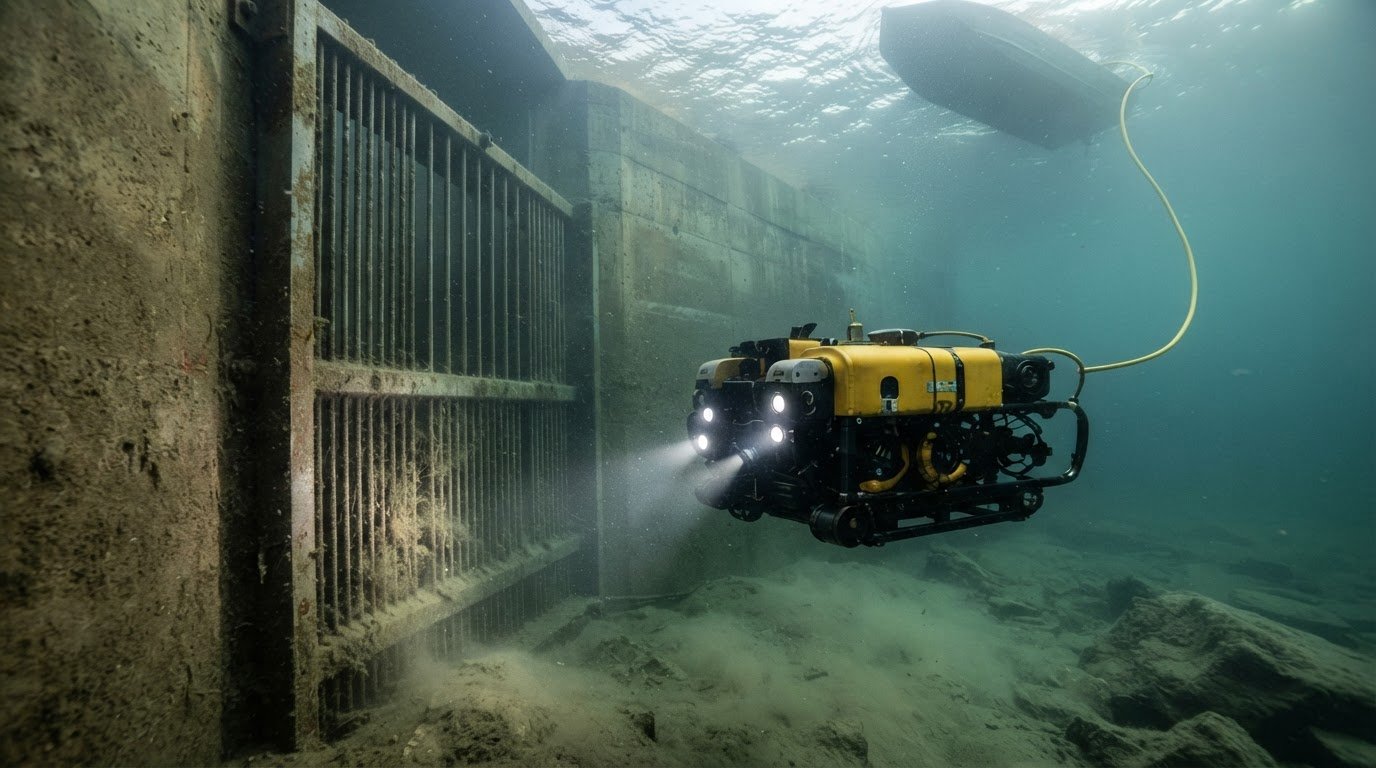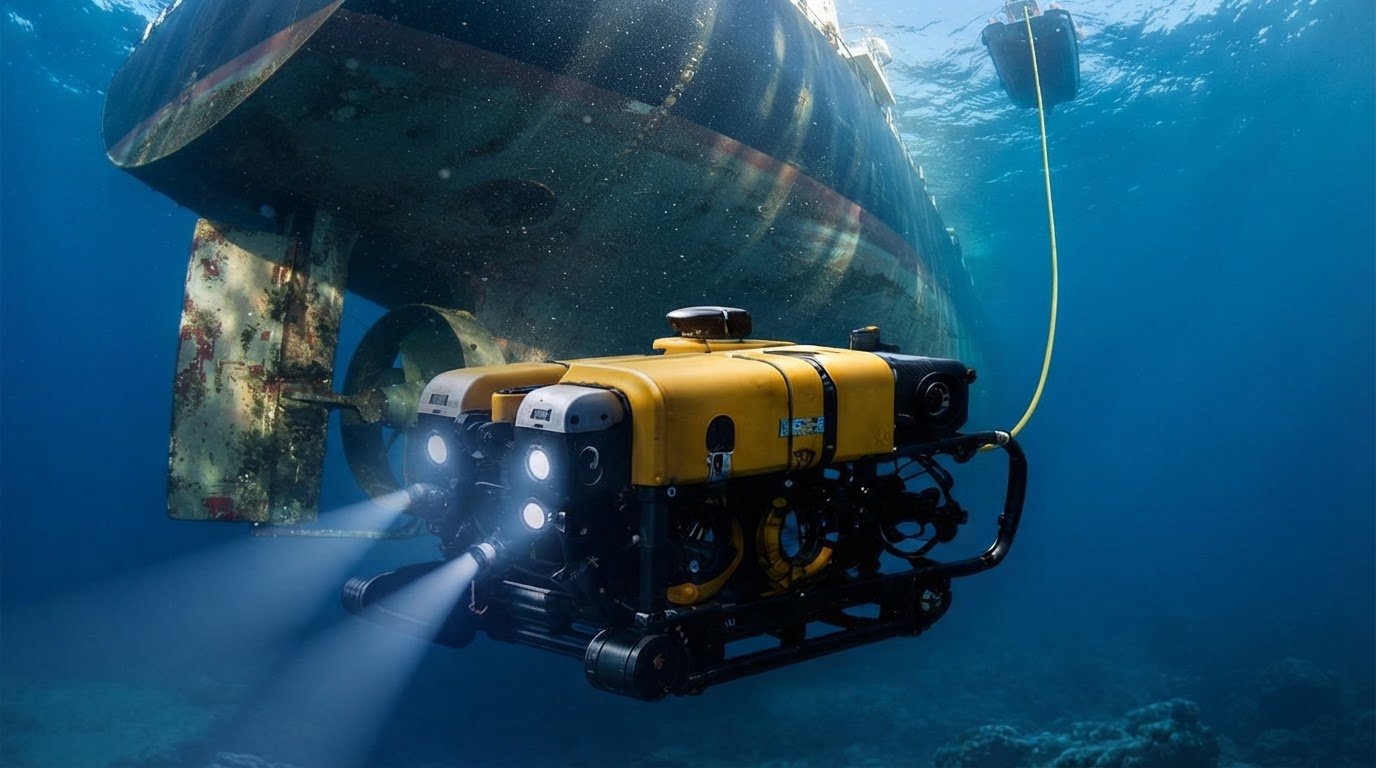
Offshore inspections don’t have to start by sending people into difficult underwater environments. An offshore inspection ROV captures visual evidence, documents submerged assets and helps operators identify where closer examination may be needed. It can support inspections of FPSO hulls and ballast tanks, platforms and rigs, risers, pipelines and subsea cables.
This matters because offshore structures face demanding conditions, and inspection teams need clear information to plan work and manage operational risk. A remotely operated vehicle can provide underwater visibility in hard-to-access areas, including confined spaces and locations with limited visibility.
This guide explains how ROV inspections work, what they can reveal about different offshore assets and which factors shape an inspection plan. It also covers how inspections support platform and rig operations, and how ROV technology fits into wider marine and subsea work.
Key Takeaways
- Understand how inspection priorities differ between FPSO hulls and ballast tanks, and what condition evidence can guide follow-up.
- See how a structured ROV inspection moves from defining the target area to capturing and reviewing asset-condition data.
- Learn which features matter when assessing risers, pipelines, and subsea cables, and how inspection findings support maintenance planning.
- Identify where remotely operated vehicles can support platform and rig inspections, including challenging underwater locations.
FPSO hull and ballast tank inspections
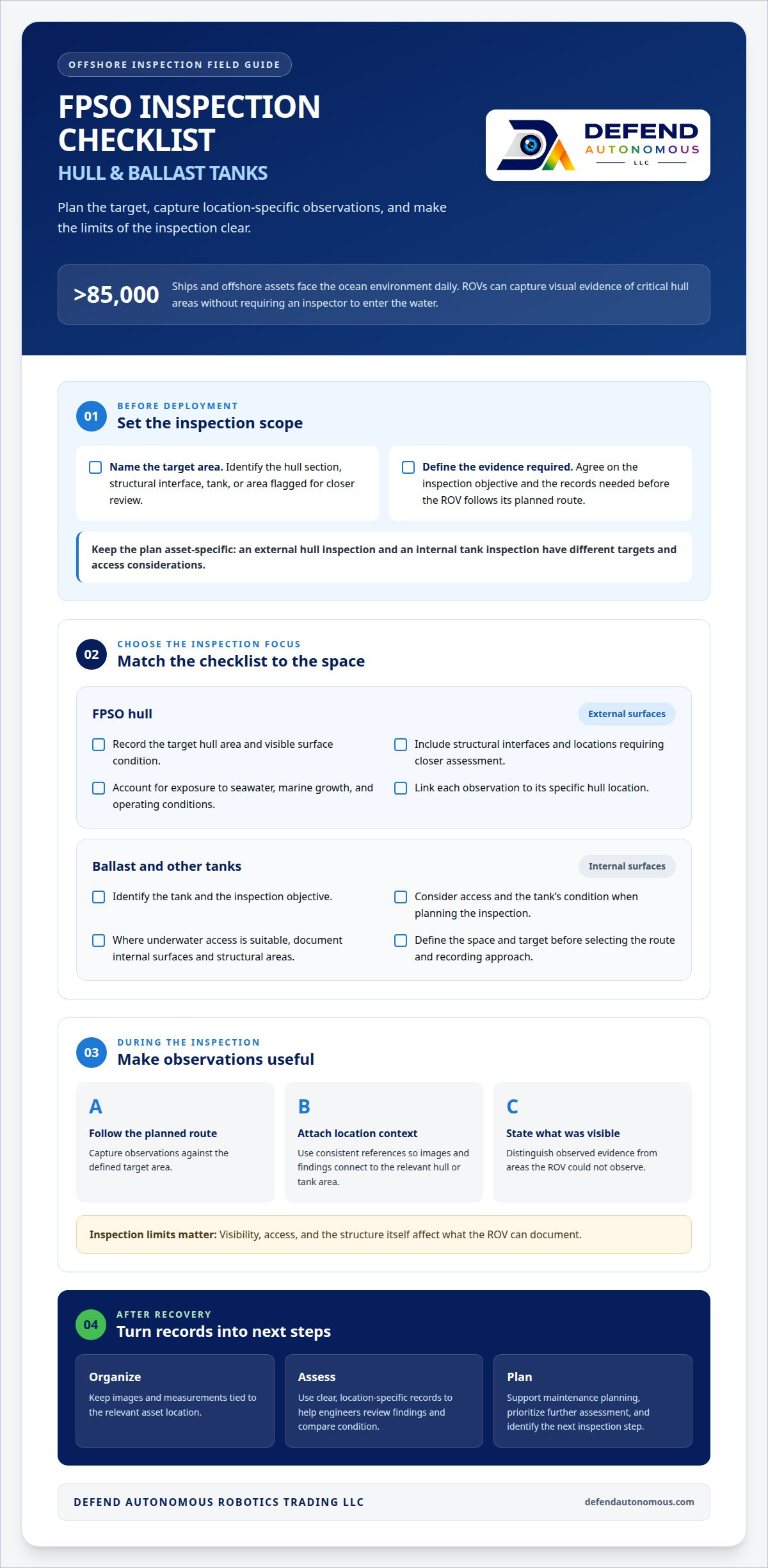
FPSO hull inspections examine the submerged surfaces of a vessel exposed to seawater, marine growth, and operating conditions. More than 85,000 ships and offshore assets face the ocean environment daily. An offshore inspection ROV can capture visual evidence and report the condition of critical hull areas without requiring an inspector to enter the water.
A practical inspection starts by defining the target area and the evidence required. For an FPSO, this may include hull sections, structural interfaces or areas flagged for closer review. The ROV follows the planned route and records observations, helping the team link each finding to its location. Clear, location-specific records make comparisons and follow-up more useful.
Ballast and other tank inspections need a separate plan because the target is inside the vessel, not on its external hull. The team identifies the tank and inspection objective, then considers access and the tank’s condition. Where underwater access is suitable, an ROV can provide visual coverage of internal surfaces and help assess material integrity.
- Hull: Record the target area, visible surface condition, and any locations requiring closer assessment.
- Ballast tanks: Focus the inspection on internal surfaces and structural areas tied to the stated objective.
- Other tanks: Define the space and inspection target before selecting the route and recording approach.
For each task, the inspection team should distinguish observed evidence from areas they could not observe. Visibility, access and the structure itself affect what the ROV can document. A consistent record links images and measurements to the relevant hull or tank area, helping engineers assess findings and plan the next inspection step.
For platforms and FPSOs, this structured approach turns underwater observations into useful condition information. The findings can support maintenance planning, prioritize further assessment and give decision-makers a clearer view of hull and ballast tank condition.
How Is an Offshore Platform ROV Inspection Carried Out?
An inspection begins by defining the asset, target structure and evidence required. The ROV then records observations to support integrity monitoring and follow-up decisions.
Offshore Asset Inspection Scope
For oil and gas assets, the scope can include submerged hull sections and structural interfaces. Offshore wind inspections may focus on submerged support structures and areas identified for assessment. Operators define the target and required records before deployment, then link observations to specific asset locations. In the United States, regulatory obligations and industry standards depend on the asset, worksite, contract and inspection scope, so project procedures guide the plan.
ROV Types, Sensors, and Tools
Inspection vehicles range from compact observation ROVs to larger work-class systems. Compare options based on access, stability, payload and task requirements. Cameras and lights capture visual evidence, while sonar can support navigation when visibility is limited. Measurement tools help assess material integrity. Purchase, rental and operating costs depend on vehicle class, sensors, deployment logistics and crew requirements, rather than a universal rate.
Depth Ratings and Operating Limits
Depth ratings vary by vehicle design and pressure-rated components, so match the selected ROV’s operating limits to the inspection location. The practical limit also depends on tether management, currents, visibility and access around the structure. Before launch, compare the planned depth and conditions with the vehicle’s rated limits to keep the inspection plan aligned with the asset and operating environment.
Risks and Safety Procedures
Entanglement, restricted access, poor visibility and changing conditions can limit an ROV inspection. A pre-deployment review should define the route, communications, abort criteria and recovery plan. Pilots and technicians need vehicle-control skills, equipment knowledge and task-specific training, with responsibilities agreed before launch. An ROV can provide situational information to divers, but it does not replace coordination of underwater work and operational hazards.
Riser, pipeline, and subsea cable inspections
ROVs can inspect pipelines, risers, subsea cables, submerged structures and vessel hulls. Teams use the resulting visual records to locate findings and plan follow-up work.
Pipeline Inspection and Geolocation
A pipeline inspection follows a defined route along the line, recording visible condition and points of interest. The record may note coating condition, marine growth, exposed sections and locations warranting closer assessment. Geolocation connects each observation to its position along the pipeline, helping teams match images and findings to the asset. Consistent location references also make later comparisons more useful.
Before deployment, define the pipeline segment and inspection objective. A route focused on visible external condition differs from one intended to investigate a particular anomaly. During the run, the pilot follows a systematic track and records observations with location context. After recovery, the team organizes findings by pipeline position, separates visible evidence from interpretation and identifies areas for further review.
Riser and Subsea Cable Inspections
Risers connect subsea infrastructure to surface facilities, so the inspection scope should cover their length and structural transitions. An ROV can document visible condition around connections, bends, supports and exposed sections. For subsea cables, the inspection can follow the route and record visible changes, contact points or areas where the cable appears unsupported. Each observation needs a clear location reference.
These assets have different inspection priorities. A riser review emphasizes structural condition and transition areas, while a cable review follows continuity and visible support along its route. Remote observation gives engineers evidence from underwater locations, regardless of surface visibility. The inspection record should identify the target, describe the observation and link each finding to the relevant asset section.
For all three asset types, a useful record combines repeatable route coverage with clear descriptions. Teams can compare inspection runs when records use consistent location references and asset identifiers. A detected change can then be assessed in context, rather than treated as an isolated image. This supports maintenance planning and directs further inspection toward relevant locations.
Offshore platform and rig inspections
Platform and rig inspections use underwater ROVs to survey submerged infrastructure, capture visual evidence, and help engineers assess structural condition. Some inspection areas lie 200 feet underwater, where limited visibility or tight spaces can complicate access. A remotely operated vehicle gives the inspection team a way to observe these locations and build a clearer picture of subsea assets.
Plan the survey around the structure and the decision it needs to support. Identify the target area, establish the route and record observations with their locations. For example, a survey may focus on visible structural condition in a hard-to-reach area, then flag findings for engineering review. The resulting record helps distinguish observed conditions from areas needing further assessment.
ROVs can support divers by providing situational information before they enter the water and assisting during diving operations. This can be useful when teams need underwater context around a platform or rig. The ROV’s observations help inform the work plan, while the inspection team considers visibility, access and the asset’s operating environment.
Inspection frequency can also respond to changing conditions. Offshore platform operators may conduct ROV inspections more frequently during summer as marine growth patterns change seasonally. This timing can help teams observe developing conditions and prioritize areas for review. Consistent survey records make changes easier to assess across inspection runs.
Using an ROV for an inspection can offer operational value compared with mobilizing a large offshore vessel. Equinor’s platform manager said the company saves one million NOK each time it avoids hiring one. The right method depends on the inspection objective and access required; an ROV does not replace every inspection approach.
- Define: Set the target structure, route, and evidence needed.
- Survey: Capture visual observations and location context.
- Assess: Use findings to prioritize engineering review or follow-up.
For subsea inspection planning connected to platform and rig assets, explore marine and subsea solutions from Defend Autonomous Robotics Trading LLC.
Defend Autonomous Robotics Trading: AMR & AGV Automation Solutions
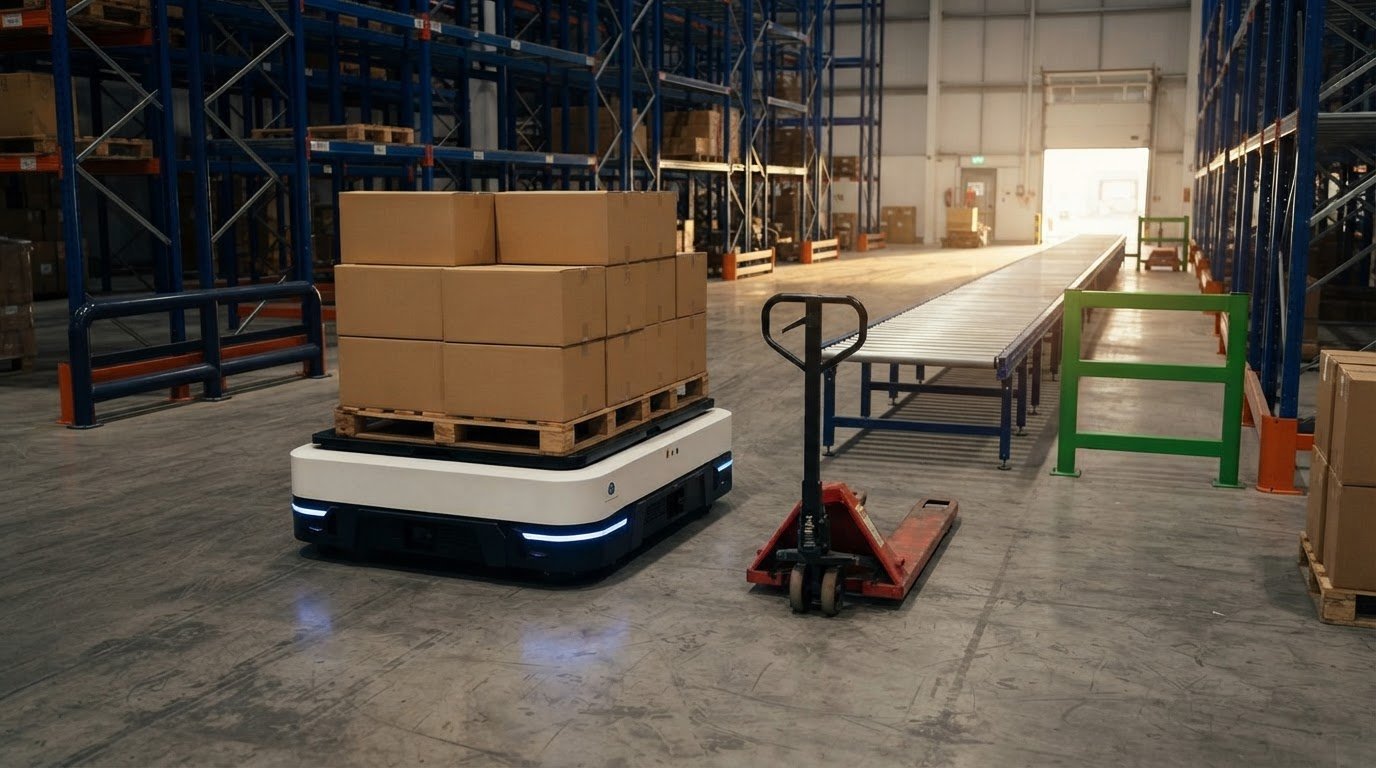
Defend Autonomous Robotics Trading offers AMR & AGV Automation Solutions as a distinct automation pathway alongside offshore inspection planning. ROV inspections address underwater assets, while AMR and AGV systems serve other organizational automation objectives. Keeping these workstreams distinct helps teams match each technology to its purpose.
For decision-makers reviewing subsea inspection findings, the next step is to define the required inspection capability and consider whether broader automation priorities also need attention. AMR & AGV Automation Solutions can support that wider discussion about autonomous systems, but they do not replace underwater asset inspection.
Contact Defend Autonomous Robotics Trading to discuss your automation priorities.
Turn inspection findings into the next operational decision
An offshore inspection ROV is most useful when its findings inform clear engineering priorities. Let the inspection objective guide what the team records, how observations are assessed and which follow-up actions take precedence. This discipline turns underwater data into a more useful basis for asset planning.
Defend Autonomous Robotics Trading LLC also offers AMR & AGV Automation Solutions, an AI Coffee & Beverage Robot and CNC and advanced manufacturing solutions. These capabilities address different operational needs; marine and subsea technology remains the relevant focus for underwater inspection.
Bring your inspection or automation priorities into the next discussion. Contact Defend Autonomous Robotics Trading LLC to explore a practical way forward. A clear objective is the first step toward confident planning.
Frequently Asked Questions
How Are ROVs Used in Offshore Operations?
ROVs give offshore teams a remotely operated view of underwater work areas and infrastructure. Operators can use them to inspect, survey and collect visual or other task-relevant information. For example, recorded observations can help an inspection team distinguish areas for routine monitoring from locations needing engineering review. The vehicle’s role depends on the task, asset and information needed for the next operational decision.
How Is the Offshore ROV Workforce Changing?
Offshore ROV work combines vehicle operation with data handling and coordinated planning. Pilots control the vehicle, while technical staff prepare equipment and support deployment; engineers interpret findings for asset decisions. A practical workforce therefore needs hands-on systems knowledge and the ability to document observations clearly. Teams must also coordinate ROV activity with vessel operations and other work in the area.
What is an ROV inspection?
An ROV inspection uses a remotely operated underwater vehicle to observe or assess submerged equipment and structures. The vehicle performs a defined task under operator control, while the team records relevant observations for review. Unlike a general survey, an inspection focuses on a specific asset or condition question. For example, the objective may be to document a component’s visible condition for maintenance planning.
What is an offshore inspection ROV and what is it used for?
An offshore inspection ROV is a remotely operated underwater vehicle used to gather information about subsea assets. It can support inspections of offshore structures and equipment that are not directly visible from the surface. The team first defines the inspection objective, then aligns the vehicle and recording approach with that goal. Its value lies in providing task-specific underwater observations for technical assessment.
How is an offshore ROV inspection planned and carried out?
Planning starts by defining the asset, inspection objective and information the team needs. The team then considers the work area, access, operating conditions and how observations will be recorded. During deployment, the pilot follows the agreed task plan and communicates relevant findings. Afterward, records are organized for technical review, with follow-up work linked to the asset and observed condition.