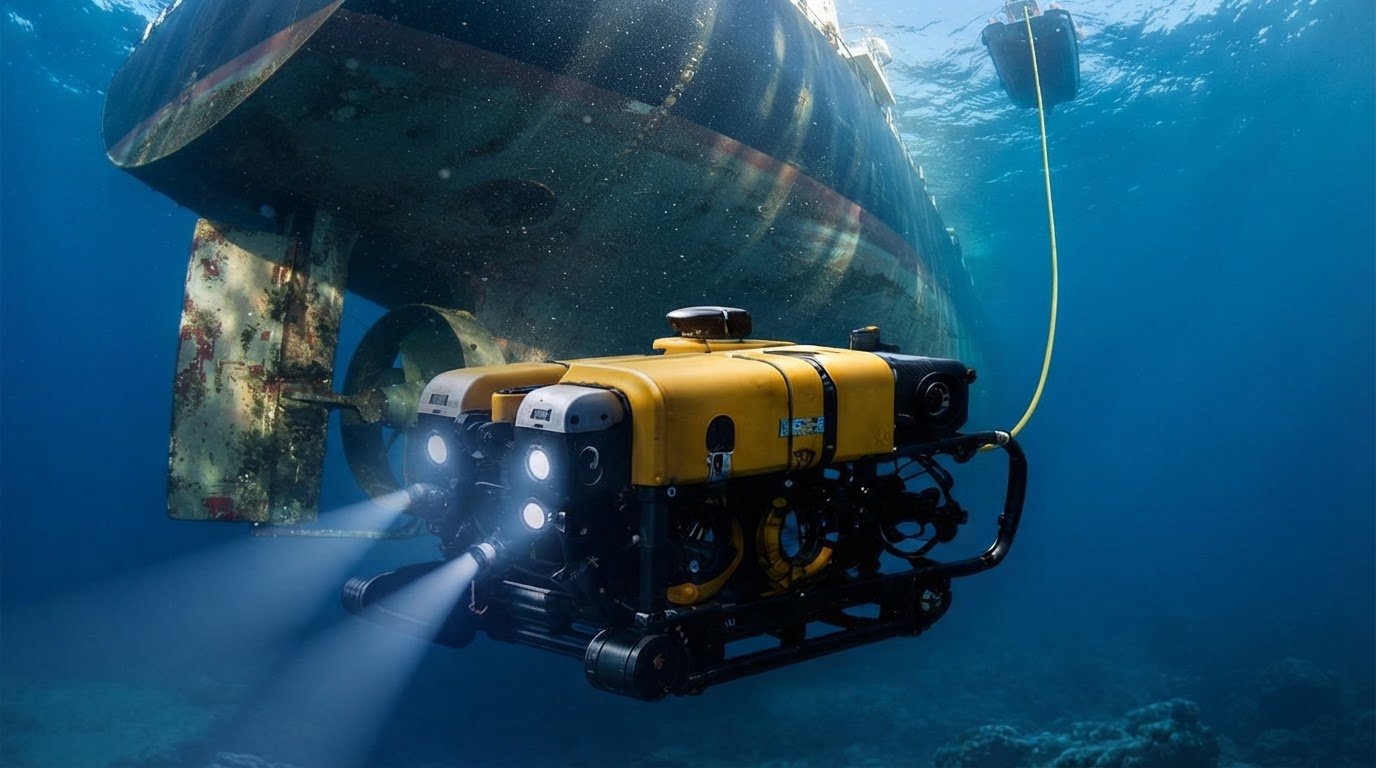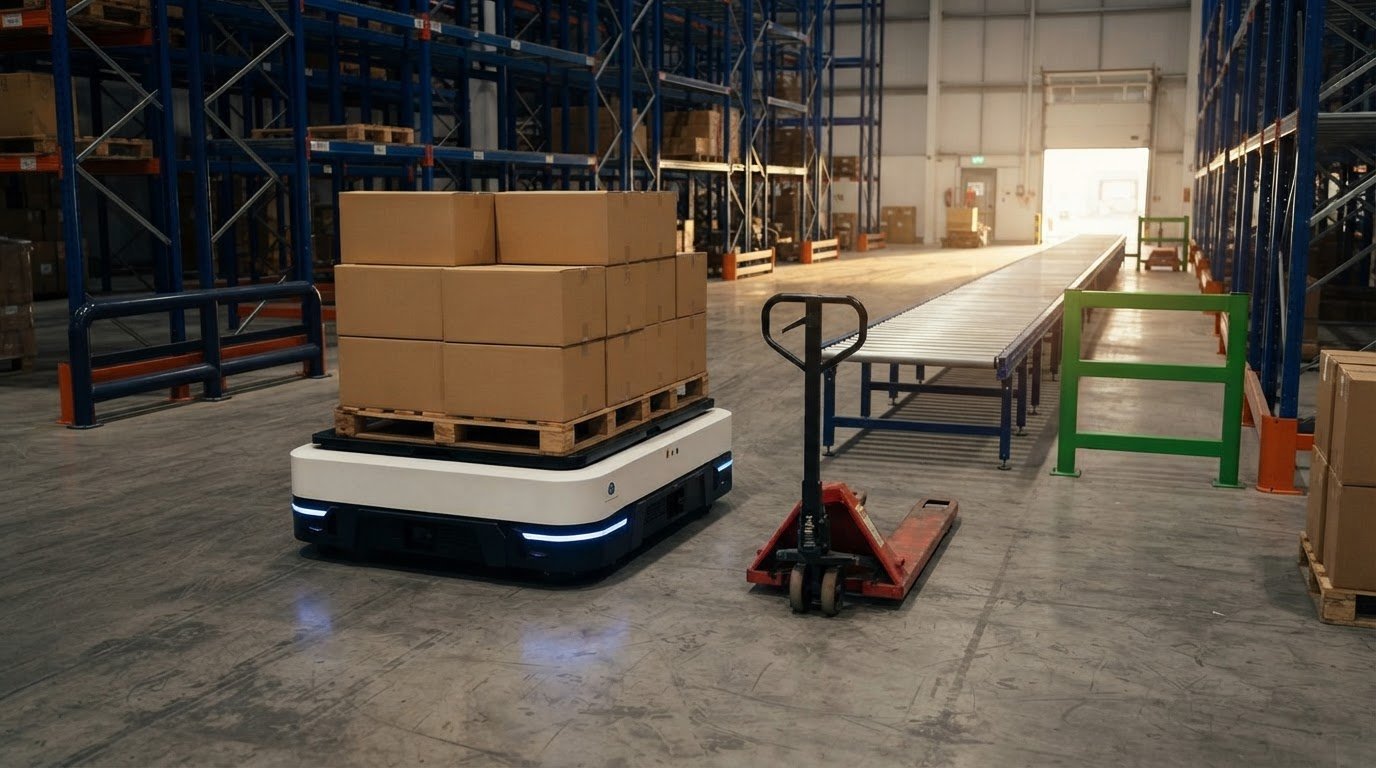
AI is moving robots beyond fixed command sequences. AI in robotics helps machines interpret sensor data, recognize objects and obstacles, and select actions as conditions change. This allows robots to navigate and perform assigned tasks more autonomously, while people retain oversight of complex or sensitive decisions.
Speed and efficiency are only part of the impact. Robots can also support work in repetitive, hard-to-access, or hazardous environments. Their value depends on how well perception, decision-making, and physical action work together.
This article explains how machine learning, computer vision, and language processing help robots sense and respond to their surroundings. You’ll learn how autonomous systems work, where robots support people across industries, and how AI-enabled machines can contribute to security, customer service, and disaster response. The focus is practical: what these systems can do, how they fit into human-led operations, and where their limitations matter.
Key Takeaways
- See how machine learning and computer vision help robots interpret surroundings and adjust actions to changing conditions.
- Compare how robotic systems support work across manufacturing, agriculture, healthcare, retail, and hospitality.
- Understand how sensors, AI decision-making, and navigation combine to enable autonomous operation.
- Explore how natural language processing can make service robots easier for people to interact with.
- Learn where robots can assist with security, customer service, and disaster response, and how automation solutions can address operational needs.
AI technologies including machine learning, deep learning, and computer vision
Artificial intelligence connects a robot’s sensor inputs to decisions and physical actions. In hospitality, for example, a service robot can use camera data to distinguish a table from a person moving nearby.
In the United States, AI robot prices depend on factors such as robot type, sensors, computing hardware, integration, and support. Businesses and consumers receive pricing after requesting a quote.
Machine Learning and Reinforcement Learning
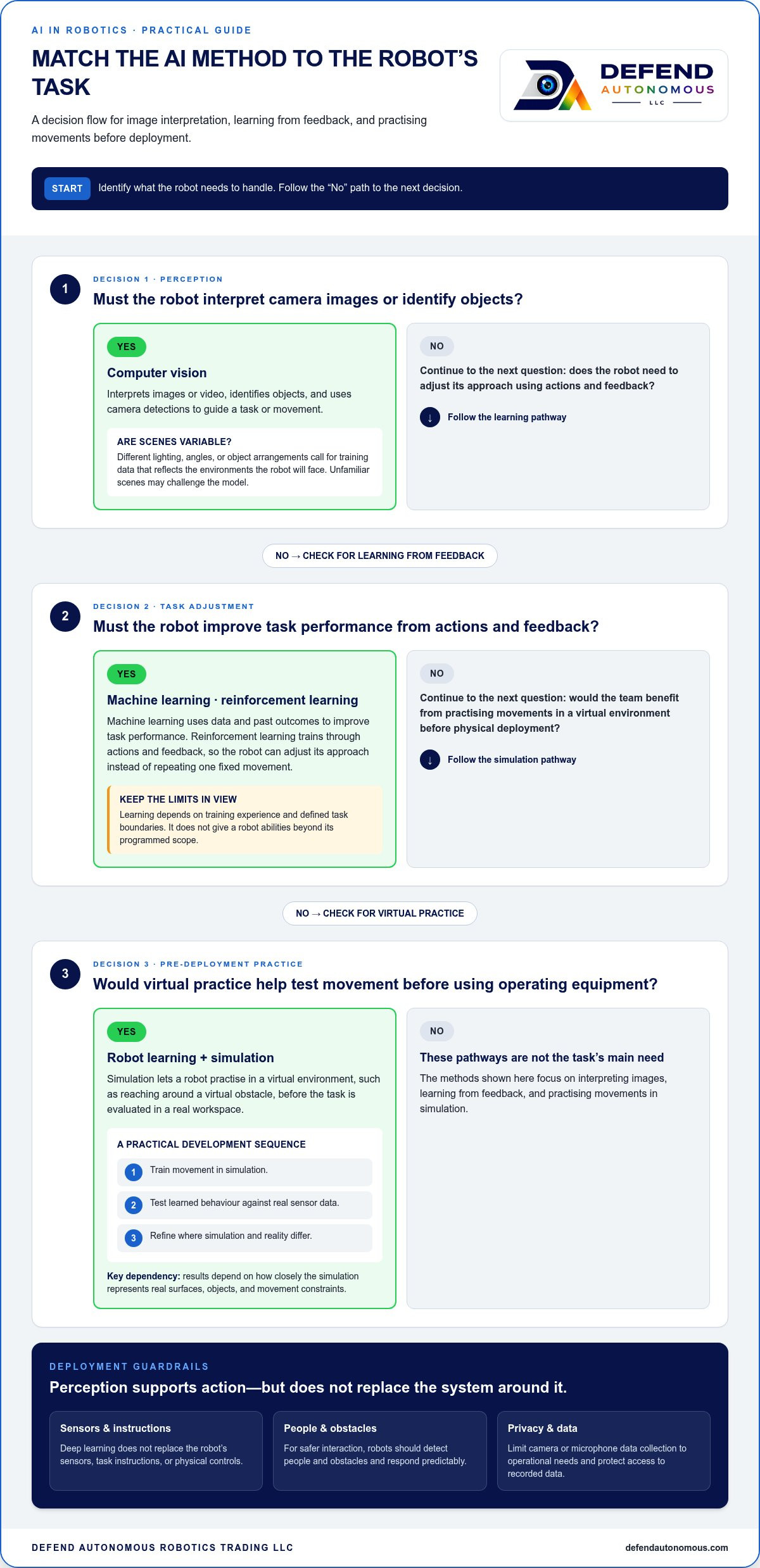
Machine learning is a form of artificial intelligence that uses data and past outcomes to improve task performance. Reinforcement learning trains a robot through actions and feedback. This allows a robot to adjust its approach rather than repeat one fixed movement. For example, a beverage robot can use feedback from attempted movements to refine how it reaches for a cup.
Benefits include adapting to changing task conditions and refining movements. Limitations include dependence on training experience and defined task boundaries. Learning can improve performance, but a robot cannot develop abilities beyond its programmed scope or become universally capable.
Deep Learning and Neural Networks
Deep learning uses layered neural networks to identify patterns in large data sets, including images captured by a robot’s camera. Each layer processes information to help distinguish useful features from visual complexity. For example, a network trained on varied images may classify cups by shape and position rather than relying on a single image match.
This capability matters when a robot encounters different lighting, angles, or object arrangements. Training data should reflect the tasks and environments the robot will face; otherwise, the model may struggle with unfamiliar scenes. Deep learning can strengthen perception, but it does not replace the robot’s sensors, task instructions, or physical controls.
Robot Learning and Simulation
Robot learning uses experience to improve task performance, while simulation lets a robot practise in a virtual environment before physical deployment. This gives teams a way to test movement sequences without making every early adjustment on operating equipment. For example, a simulated robot can practise reaching around a virtual obstacle before the task is evaluated in a real workspace.
Results depend on how closely the simulation represents real surfaces, objects, and movement constraints. A practical development sequence is to train in simulation, test the learned behaviour against real sensor data, then refine it where differences appear. This approach can support logistics and other operations where routes and task conditions vary.
Computer Vision in Robotics
Computer vision enables a robot to interpret images and video, identify objects, and respond to what its camera detects. In hospitality, visual recognition can help a robot locate a serving area or notice an obstacle on its route. The robot converts pixels into classifications and uses the results to guide a task or movement.
AI robots can provide more adaptive perception and task execution, but their sensing also creates safety, privacy, and ethical risks. Cameras or microphones may capture people and their surroundings, so deployments should limit data collection to operational needs and protect access to recorded data. For safer interaction, robots should detect people and obstacles, respond predictably, and avoid biased profiling.
Applications in manufacturing, agriculture, healthcare, retail, and hospitality
AI-enabled robots apply machine learning to specific tasks across production, care, and service environments. Their role depends on the work, such as moving materials, assisting clinicians, or supporting guest-facing operations.
AI Applications in Manufacturing
In manufacturing, AI helps robots adapt movements and inspections to product variation, rather than repeat only fixed sequences. The industry has used robotic intelligence for more than 50 years, and machine learning extends its role in tasks such as assembly and visual inspection. For example, a vision-guided arm can identify a component’s position before placing it, helping maintain consistent handling as parts arrive in different orientations.
This flexibility matters when product types or workpieces change. A factory can use AI to classify visible defects, adjust a robot’s motion, or direct machines to a defined next task. The system still follows its instructions, so its capabilities depend on the task, work area, and permitted actions.
In agriculture, AI-powered machines can monitor soil health, optimize irrigation, and automate harvesting. A field robot might use sensor readings to identify areas that need water, while a harvesting system can locate produce for picking. These applications connect observation to targeted action, helping farms manage varied environments. Their usefulness depends on crop conditions, terrain, and the quality of the data guiding each task.
Healthcare Applications
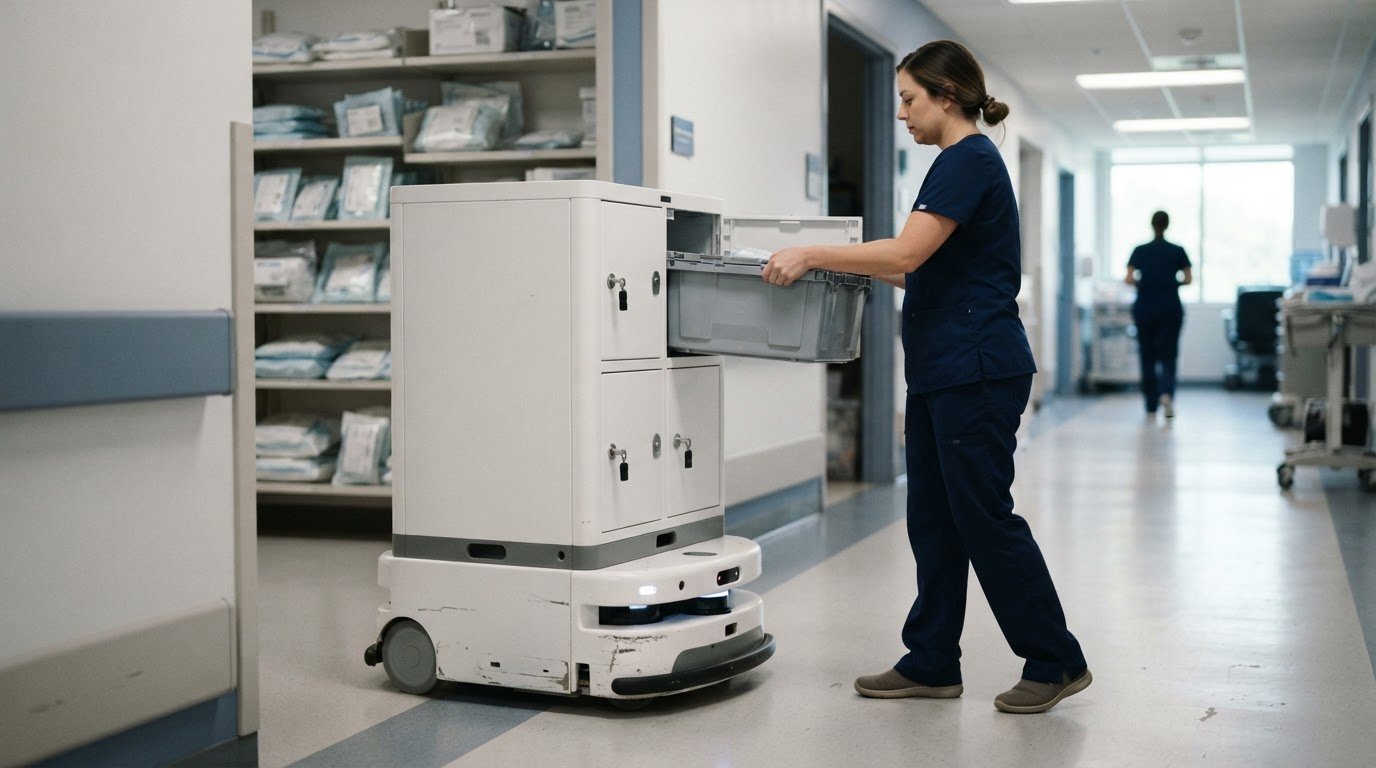
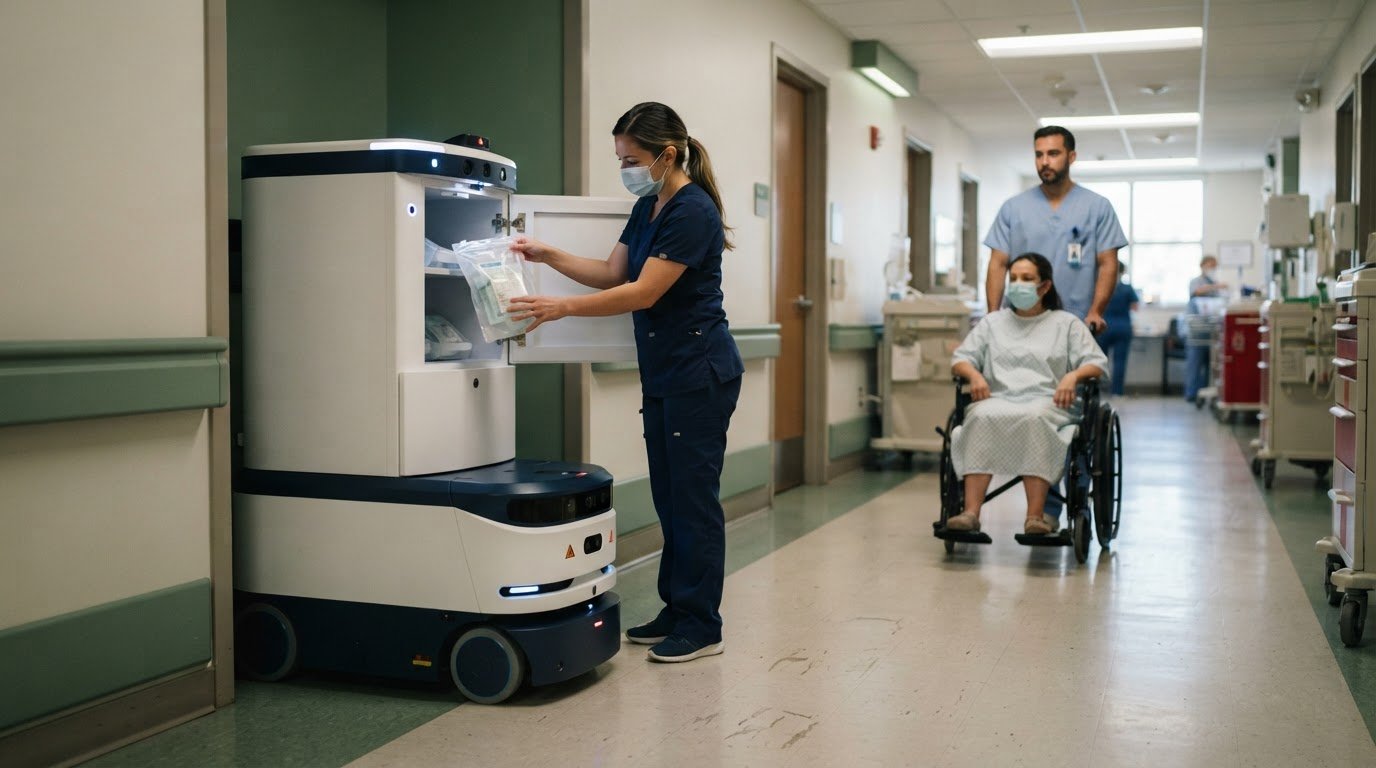
In healthcare, robots can support surgical assistance and patient care, using AI to interpret task-related information and help carry out defined actions. For example, a delivery robot can transport supplies through a care facility, while a surgical robot supports a clinician during a procedure. These systems meet different needs: one moves materials, while the other assists clinical work under human direction.
That distinction matters when implementing these systems. A delivery robot must navigate corridors and respond to people or obstacles; a surgical system must support precise, clinician-led activity. AI can assist with perception and task execution, but healthcare applications require careful integration into established workflows and clear human oversight.
Transportation offers another application: self-driving cars and drones use AI to navigate. Their systems interpret their surroundings and select actions as conditions change. In aerospace, robots can support inspection and handling around aircraft components, where access and repeatability influence how work is organized. In each setting, value depends on matching the robot’s sensing and movement capabilities to operating conditions.
Retail and hospitality bring robots into customer-facing settings. A retail robot can move stock or assist with inventory, while a hospitality robot can deliver items or support beverage service. For instance, a robot serving drinks must coordinate movement and object handling around guests. These machines can take on repetitive tasks, giving staff more time for requests that require judgment or personal attention.
For operators exploring this category, robotic hospitality automation is one way to examine how defined service tasks can be integrated into daily operations.
How AI and robots work together in autonomous systems
An autonomous robot combines sensors, programmed objectives, and AI-based decisions to act in a physical environment. Its control system continually compares incoming information with the task it needs to complete.
Traditional robots generally follow programmed sequences and need reprogramming when tasks or conditions change. AI-powered robots can interpret new sensor data and adjust actions within their defined capabilities. Building one requires robotics, software, and algorithm skills: define the task, select sensors and actuators, develop perception and control, then test performance in simulated and real environments.
Autonomy, Adaptation, and Decision-Making
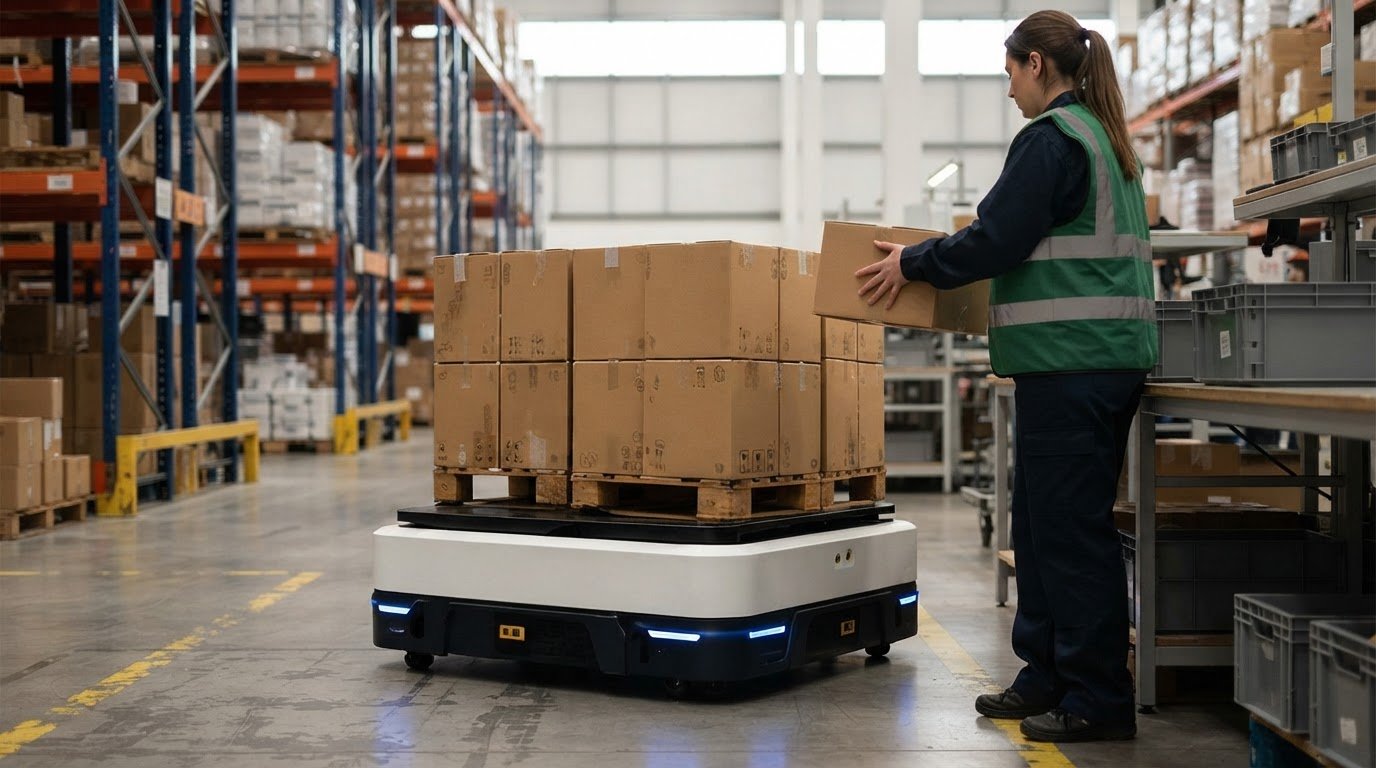
AI-driven autonomy lets a robot use data and programmed objectives to select actions without a person directing every movement. In a warehouse, for example, an autonomous mobile robot may need to respond to a temporarily blocked aisle. It can evaluate nearby sensor readings, choose another available route, and continue its assigned delivery. Its decisions remain bounded by its instructions and operating conditions.
Mobile Robots with 3D Cameras and LiDAR
Autonomous mobile robots can use 3D cameras and LiDAR to measure surrounding objects and build spatial awareness. A 3D camera captures depth as well as image details, while LiDAR supplies distance measurements. Together, these inputs can help a robot distinguish an open path from a pallet or cart. In a warehouse, that information supports route planning and obstacle avoidance as the robot moves.
Computer Vision and Autonomous Navigation
Computer vision helps a robot interpret camera images for navigation, object recognition, and position updates. For example, a robot can compare visible landmarks with its stored map, then use the results to estimate its location. Simultaneous localization and mapping, or SLAM, enables a robot to map an unfamiliar environment while tracking its position. This is useful when a fixed route is unavailable.
Autonomous Task Completion
AI-powered robots complete tasks by combining sensor inputs, decision logic, and physical actions under programmed directives. A delivery robot, for example, receives a destination, navigates around obstacles, and signals completion when it arrives. If its sensors detect a blocked route, the system can reassess its movement options. Task boundaries, instructions, and physical capabilities determine which actions it can perform.
Natural language processing for human-robot interaction
Natural language processing (NLP) enables robots to interpret spoken or written language and respond with relevant information or actions. In a hotel, a guest might ask a service robot, “Where is the conference room?” The robot identifies the request, retrieves location information, then gives directions or displays a route. This turns a spoken question into a useful interaction without requiring someone to operate a control panel.
A practical exchange combines several functions. A microphone captures speech, language processing identifies the request, and the robot selects an appropriate response. If a guest says, “Please bring towels to room 12,” the system must recognize the delivery request and destination, then pass those details to its task process. Clear responses, such as confirming the destination, help people understand what the robot will do next.
Service robots use these capabilities for people-focused tasks, including providing directions and concierge services. A humanoid robot may answer a visitor’s question at a lobby desk, while a non-humanoid service robot can respond to a spoken request during a delivery. The key is matching the interface to the task: conversation can help with questions, while a defined command can start a routine operation.
In hospitality, a robot can handle repetitive service tasks while staff manage requests that call for judgment, empathy, or personal attention. The International Federation of Robotics describes hybrid service models in which robots take on repetitive tasks and people provide personal service. For example, a service robot might deliver an item while an employee handles a guest’s unusual request. This division supports service without treating human interaction as interchangeable with automation.
Human-robot interaction matters in healthcare and industrial environments, where context shapes communication needs. In healthcare, a delivery robot may need to signal its destination or clarify a supply request. On an industrial floor, a robot may need to communicate its status to a nearby worker. In both cases, concise language and predictable responses make interactions easier to understand.
Effective interaction requires more than word recognition. Robots need task-specific vocabulary, clear response patterns, and a way to handle unclear requests. If a guest asks for “the room upstairs,” a robot should clarify the destination rather than choose one arbitrarily. Designing exchanges around real tasks helps organizations decide where speech or text adds value and where a simple button or staff handoff is more appropriate.
Robots for security, customer service, and disaster response
Security, service, and emergency work show how AI-enabled robots can support people beyond production lines. A robot can patrol a defined facility route, guide visitors through a lobby, or enter a hazardous area before responders. Each role depends on specific physical capabilities, sensors, and instructions. The practical question is not whether a robot can replace a person, but which repetitive or risky task it can perform reliably.
In security operations, a mobile robot can follow a scheduled patrol and use cameras or other sensors to observe its surroundings. If it detects an unusual condition, it can report the observation for human review. This supports ongoing monitoring across a designated space, but detection is not the same as judgment. People still need to assess context, distinguish a genuine concern from an ordinary event, and decide what action to take.
In customer service, a hospitality robot can deliver items, answer routine questions, or direct a visitor to a destination. For example, a robot in a hotel lobby might guide a guest to a meeting room while staff handle a complex reservation request. This hybrid model assigns structured tasks to automation and leaves exceptions to employees. Clear handoffs matter: the robot should explain what it can do and when a person needs to assist.
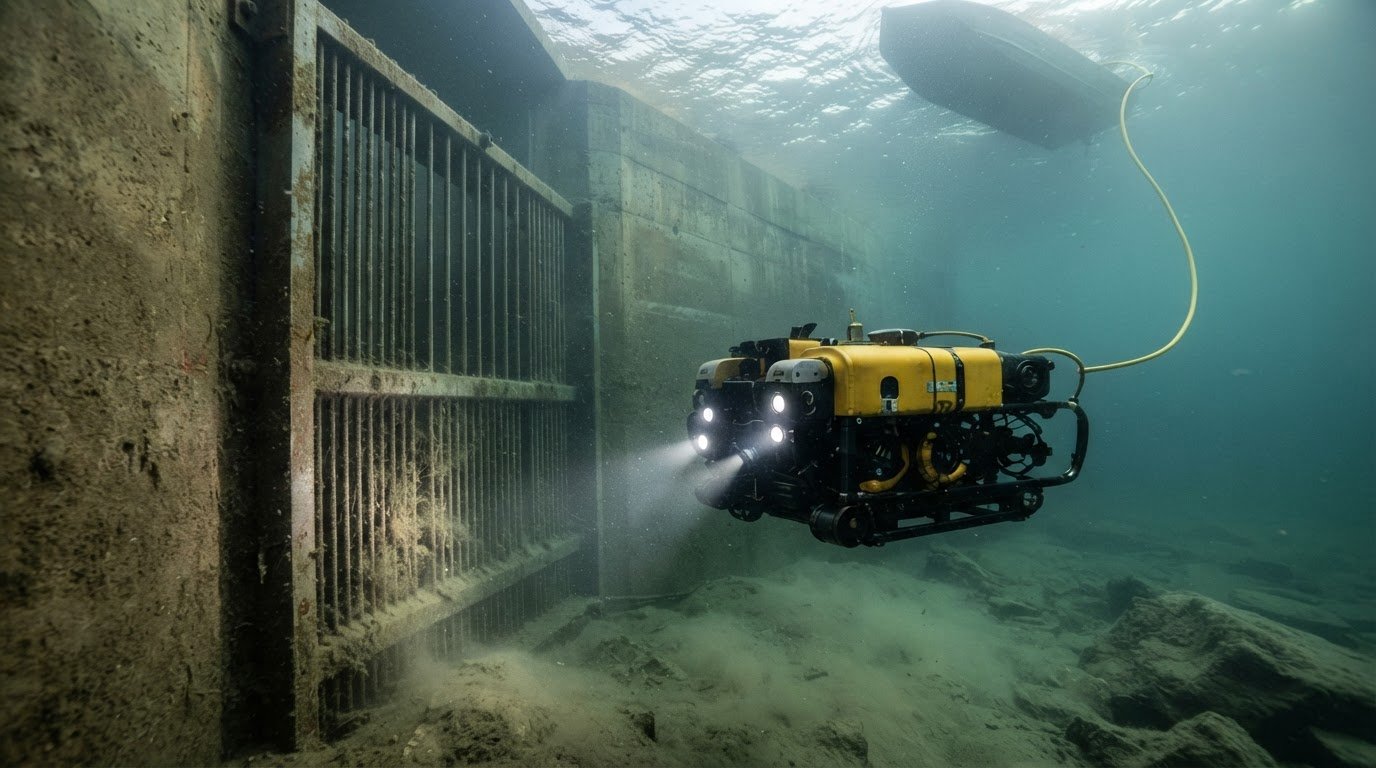
Disaster response presents a different operating environment. AI-powered robots can help locate survivors in hazardous or collapsed spaces where debris, unstable structures, or limited access complicate human entry. A robot may gather visual or sensor information from an area and relay its findings to response teams. Its navigation and physical design must suit the terrain, while people interpret the information and coordinate the response. The robot extends access, not authority.
A practical deployment starts with a defined task, such as checking a corridor or delivering supplies. Teams then identify environmental constraints, select suitable sensing and mobility capabilities, and establish how the robot reports findings or requests human support. Testing should include realistic conditions, such as a blocked hotel passage or changing access routes after an emergency. These checks show whether the system can perform its intended task.
Robots contribute most when their role is narrow, observable, and integrated with staff workflows. A patrol system should report what it detects; a service robot should make destinations and handoffs clear; a response robot should transmit useful information to human teams. To explore automation for operational environments, discuss a robotics deployment suited to your task requirements.
Defend Autonomous Robotics Trading: AMR & AGV Automation Solutions
Defend Autonomous Robotics Trading provides automation solutions for organizations assessing how robotics can meet operational needs. Its AMR & AGV Automation Solutions support autonomous material movement, while its AI Coffee & Beverage Robot automates beverage service.
For hospitality teams, the beverage robot can support a defined service task. For facilities moving materials, AMR and AGV solutions can automate workflows. The right fit depends on the task, work environment, and how the system needs to operate alongside people.
Explore these options as part of a practical assessment of your automation priorities. To discuss robotics solutions for your operation, contact Defend Autonomous Robotics Trading or visit defendautonomous.com.
Turn Robotics Potential Into an Operational Priority
Start by identifying where intelligent automation can strengthen a defined business objective. Consider the task, its operating environment, and the role people should retain. This practical framing turns interest in AI in robotics into a focused decision about capabilities, workflow, and human oversight.
Defend Autonomous Robotics Trading offers AMR & AGV Automation Solutions, an AI Coffee & Beverage Robot, and CNC & advanced manufacturing solutions. These offerings address autonomous movement, hospitality service, and production needs in real operational settings. The right starting point depends on the work your organization wants to improve and how a robotic system would fit into existing processes.
Build the next phase around a clear use case, measurable operational priorities, and a defined human role. Contact Defend Autonomous Robotics Trading to explore robotics solutions for your organization. With a focused starting point, your team can move forward with greater clarity and confidence.
Frequently Asked Questions
Introduction: How is AI Reshaping Robotics?
AI is making robots more responsive to changing inputs rather than limiting them to fixed movements. For example, a robot sorting parcels can use visual information to distinguish package types and select a handling action. This does not mean unrestricted intelligence: organizations define the robot’s task, operating boundaries, and human handoff points before deployment.
What Are Robotics and Artificial Intelligence?
Robotics combines machines, sensors, actuators, and control systems to perform physical tasks; artificial intelligence enables software to interpret information and select responses. A robotic arm, for instance, provides movement, while an AI system can help identify which component to handle. Together, these disciplines connect computation to action, with the robot’s design and instructions determining what work it can perform.
What Are AI-Powered Robots?
AI-powered robots are physical machines that use AI methods to interpret data and guide actions. A warehouse robot, for example, can receive a delivery destination and use its navigation system to travel there. The term describes a combination of hardware and software, not one specific robot design. Some systems move through buildings; others use fixed arms or specialized equipment.
What’s the Real-World Impact of AI?
AI’s real-world impact depends on whether it improves a defined workflow, such as helping staff locate inventory or route a delivery. Teams can assess practical outcomes by examining task completion, exception handling, and how often people need to intervene. In a hotel, for instance, a delivery robot is useful only if its routes and handoffs fit the property’s operating procedures.
What is AI in robotics and how does it work?
AI in robotics means applying artificial intelligence to help a robot interpret information and select actions in the physical world. A typical cycle starts when sensors capture data, continues as software evaluates it against the task, and ends with a movement or decision. A system may also record outcomes, helping teams identify where instructions or training data need refinement.
What are common applications of AI in robotics?
Common applications include material handling, inspection, healthcare delivery, agricultural monitoring, customer service, and emergency response. The task shapes the robot: an inspection system may scan equipment for visible changes, while an indoor delivery machine transports supplies between designated areas. To assess an application, identify the repeated task, its environment, the information the robot needs, and situations that require human judgment.
What AI technologies are used in robotics, such as machine learning and computer vision?
Robots can use machine learning to adjust task performance based on outcomes, computer vision to interpret images, and natural language processing to handle speech or text. These technologies address different inputs and decisions. For example, vision can identify a package, while a language interface can receive a spoken destination. Designers match each method to the robot’s task and available data.
What are examples of AI robots used in manufacturing, healthcare, and homes?
In manufacturing, a vision-guided robot arm can help position components during assembly. In healthcare, an indoor mobile robot can transport supplies between departments. At home, a robotic vacuum can map rooms and adjust its cleaning route around furniture. These examples differ in mobility, sensing, and operating context, so compare each machine’s intended task and how people supervise it.